Weeping Fig Care Guide
Ficus benjamina
Quick Answer
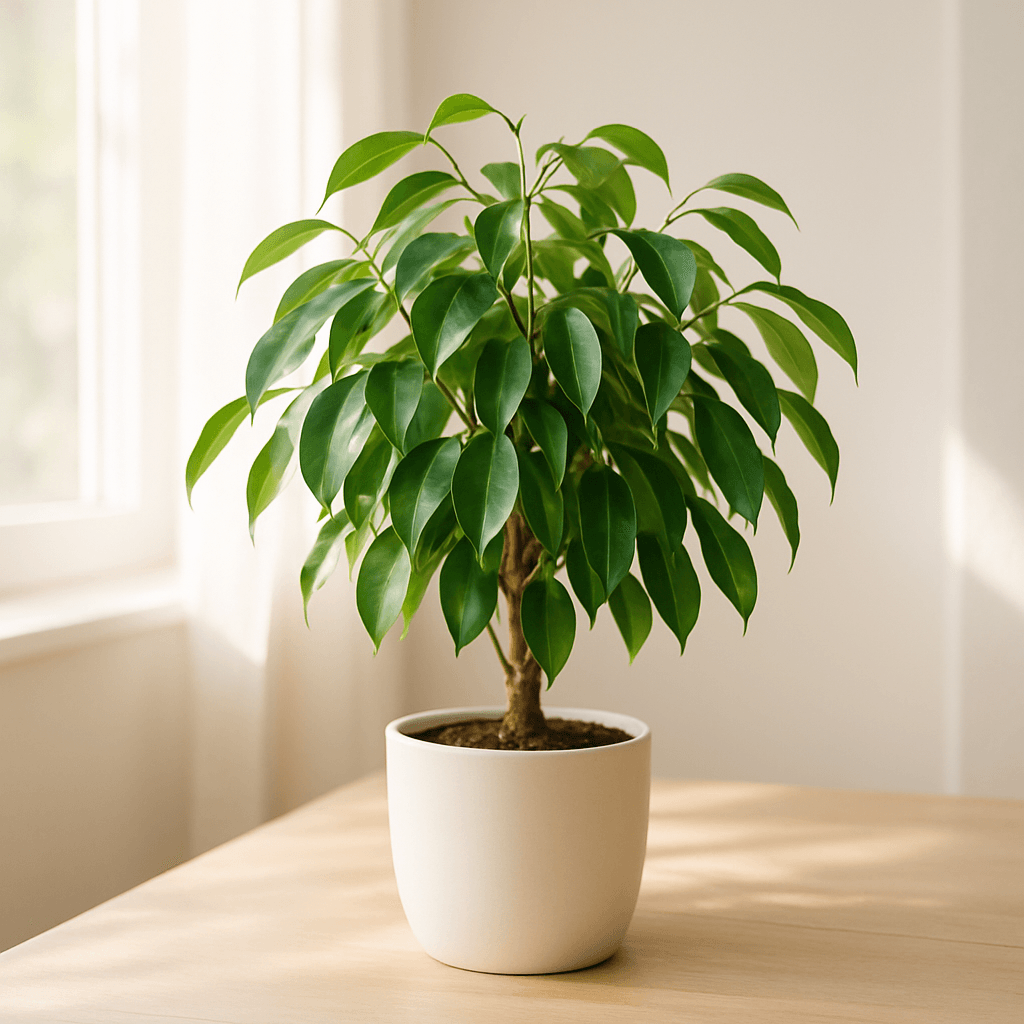
Weeping fig (Ficus benjamina) has one non-negotiable: don't move it. Every relocation — even to a seemingly better spot — triggers a dramatic leaf drop that can strip the tree nearly bare. Find the brightest stable spot in your home, commit to it, and the plant will settle. The second killer is overwatering; water only when the top inch of soil is dry and never let it sit in standing water.
⭐Difficulty
Moderate
☀️Light
Bright indirect
💧Watering
Every 1–2 weeks
🌫️Humidity
Medium (40–60%)
🌡️Temperature
60–85°F
📈Growth Rate
Moderate
Toxicity
Source: ASPCA Animal Poison Control
Watering
Summer
Every 1–2 weeks
Winter
Every 2–3 weeks
Method: Allow top inch to dry between waterings
In summer, water weeping fig approximately every 1–2 weeks; in winter cut back to every 2–3 weeks. Rather than following a calendar, allow the top inch to dry between waterings. Water thoroughly until it drains from the bottom, then don't water again until the soil passes the dryness check. Yellow leaves often signal overwatering; brown, papery leaves with dry soil mean underwatering.
Light Requirements
Bright indirect
Weeping fig does best 2–3 feet from a south- or east-facing window, screened from direct midday sun. It needs bright indirect light — significantly more than many people assume — to stay dense and leafy. In low light it drops leaves chronically and grows slowly. A sheer curtain over a south window is ideal. Once placed, don't move it; even rotating the pot can trigger brief leaf drop.
Soil & Potting
Soil: Well-draining potting mix
Pot: Heavy pot with drainage; place and leave
Temperature & Humidity
Temperature: 60–85°F (16–29°C)
Humidity: Medium (40–60%)
Fertilizing
Frequency: Monthly spring/summer
Type: Balanced fertilizer, half strength
Common Problems
Leaf drop
Leaf drop → Moved position, draft, low humidity, or overwatering. This is the defining weeping fig complaint. If it drops leaves after being moved, that's expected — give it 4–6 weeks to adjust without moving it again. If it's dropping in a stable location, check for cold drafts (from doors, windows, or AC vents), overwatering (wet soil), or insufficient light. Address the cause and be patient.
Yellow leaves
Yellow leaves → Overwatering or poor light. Check the soil — if consistently wet, hold off watering until it dries out completely. If soil is fine, assess the light: a weeping fig in insufficient light chronically drops yellow leaves. Move it to a brighter spot without changing its position dramatically.
Brown leaves
Brown leaves with dry soil → Underwatering or low humidity. Weeping figs drop brown, dry leaves when they're thirsty or in very dry air. Water thoroughly and raise humidity with a pebble tray. In winter, heated indoor air can be very dry — a humidifier near the plant helps.
Scale
Scale insects appear as small brown bumps stuck to stems and the undersides of leaves. They excrete sticky honeydew that attracts sooty mould. Wipe leaves with a neem oil solution and a soft cloth, making sure to cover stems and leaf undersides. Repeat every 7–10 days. A systemic insecticide may be needed for severe infestations.
Propagation
Weeping fig propagates by stem cuttings or air layering. For stem cuttings, take a 4–6 inch semi-hardwood cutting in summer, remove lower leaves, dip in rooting hormone, and place in moist potting mix. Keep covered with a plastic bag to maintain humidity and in bright indirect light. Roots take 4–6 weeks. Air layering is more reliable for larger plants — make a notch in a healthy branch, pack with moist sphagnum moss, wrap with plastic film, and roots develop in 6–12 weeks. The common mistake: trying to root cuttings in low humidity — a propagation dome or plastic bag is essential.
Seasonal Care Calendar
🌸 Spring
Spring is when weeping fig comes back to life after winter. Increase watering as new growth emerges, begin fertilising every 2–4 weeks with a balanced liquid fertiliser, and this is the ideal time to repot if the plant is root-bound. Avoid any repositioning in the home even now — spring leaf drop is still possible with disruption.
☀️ Summer
Summer is peak growing season. Water more frequently but always check the soil first. Growth can be rapid in good summer light. Keep away from air conditioning vents, which create cold dry air that causes leaf drop even in summer.
🍂 Fall
Growth slows as light decreases. Reduce watering slightly, stop fertilising by late October, and move it marginally closer to a window. Some leaf drop in fall is normal as light levels decrease — this is less concerning than post-move drop.
❄️ Winter
In winter, weeping fig enters a slower-growth phase. Water less frequently and ensure it's not too close to cold drafts from windowpanes. Heated indoor air is dry — a pebble tray helps. Some seasonal leaf drop is normal; as long as the plant retains most of its leaves and new growth appears in spring, this is manageable.