Fiddle Leaf Fig Care Guide
Ficus lyrata
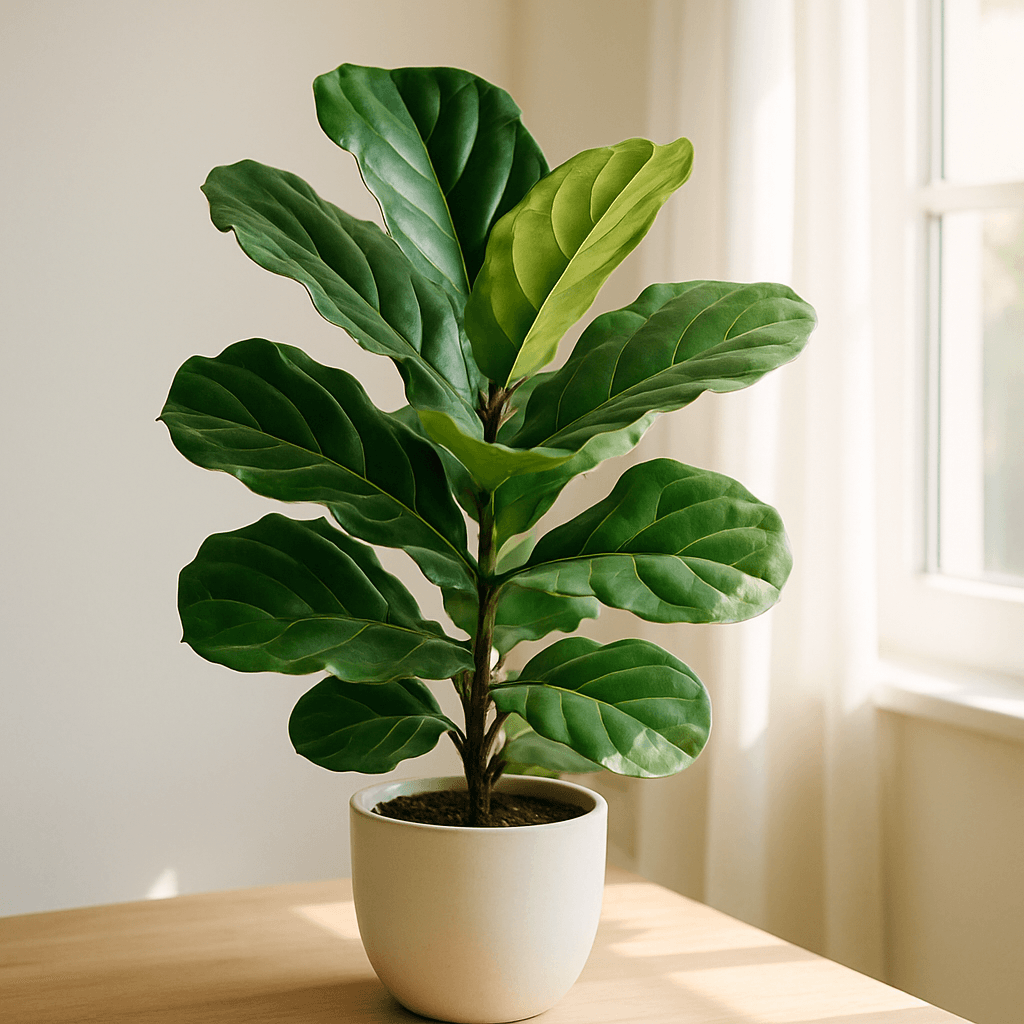
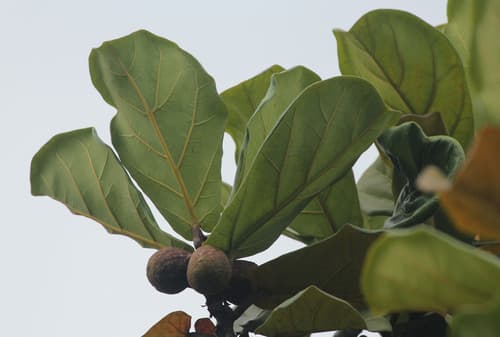
Quick Answer
The single biggest mistake people make with fiddle leaf figs is moving them once they've settled in — even rotating the pot can trigger a dramatic leaf drop. Find the brightest stable spot in your home, point it toward the light, and leave it there. Get the watering consistent and this plant will reward you, but treat it like a decoration you shuffle around and it'll punish you every time.
⭐Difficulty
Hard
☀️Light
Bright indirect
💧Watering
Every 1–2 weeks
🌫️Humidity
Medium–High (30–65%)
🌡️Temperature
60–85°F
📈Growth Rate
Moderate
Toxicity
Source: ASPCA Animal Poison Control
Watering
Summer
Every 1–2 weeks
Winter
Every 2–3 weeks
Method: Water when top inch is dry; consistent schedule
Water when the top inch of soil is dry — stick your finger in, and if there's any moisture clinging to it, wait another day or two. In spring and summer, that usually works out to every 1–2 weeks. In winter, back off to every 2–3 weeks because the plant is barely drinking. When you do water, water thoroughly until it drains from the bottom, then empty the saucer. Don't let the roots sit in standing water — that's the fast lane to root rot. The most reliable method is to water in place, slowly and evenly, so every part of the root zone gets reached. Signs you're overwatering: soft brown spots on leaves, yellowing lower leaves, soggy soil that never seems to dry out. Signs you're underwatering: leaves curling slightly inward, dry brown edges, soil pulling away from the pot edges. The most important thing here isn't the exact number of days — it's consistency. A fiddle leaf fig that gets watered on a predictable schedule, even if it's not perfect, does far better than one that gets drenched and then forgotten for three weeks.
Light Requirements
Bright indirect
Fiddle leaf figs need 6+ hours of bright indirect light daily — an east-facing windowsill or a spot 2–3 feet back from a south-facing window is the sweet spot. Direct afternoon sun will scorch the leaves, but too little light is equally deadly; if your space is dim, a full-spectrum grow light running 12 hours a day will keep the plant from stalling out entirely.
Soil & Potting
Soil: Well-draining loam or potting mix, perlite added
Pot: Heavy pot with drainage; avoid moving it
Temperature & Humidity
Temperature: 60–85°F (16–29°C)
Humidity: Medium–High (30–65%)
Fertilizing
Frequency: Monthly spring/summer; skip winter
Type: FLF-specific or balanced 3-1-2 NPK, half strength
Common Problems
Brown spots on leaves → Overwatering, root rot, or bacterial infection.
Leaf drop → Moved plant, draft, or overwatering. Keep in stable spot.
Yellowing lower leaves → Normal aging or overwatering.
Not growing → Insufficient light. Move to brighter spot.
Propagation
The most straightforward method is a stem cutting — take a 6–8 inch cutting just below a node (the bump where a leaf attaches), strip the lower leaves, and let the cut end dry out for an hour so the milky sap seals over before you put it in water or moist perlite. Place it somewhere warm with bright indirect light and change the water every few days if you're rooting in water. The thing that trips most people up is checking too early — fiddle leaf fig cuttings are slow, and it can take 6–8 weeks before you see any meaningful root development. Leave it alone, keep it warm, and wait. Air layering works better for thicker, more established stems and gives you a higher success rate if you want to propagate a taller plant without cutting off a main branch. Wound the stem, pack damp sphagnum moss around it, wrap it tightly in plastic wrap, and wait 4–6 weeks until roots are visible through the moss before cutting below and potting up.
Seasonal Care Calendar
🌸 Spring
Resume fertilizing with 3-1-2 NPK fertilizer. Wipe leaves. Do not repot until fully established.
☀️ Summer
Fastest growth period. Water and feed consistently. Do not move the plant.
🍂 Fall
Stop fertilizing. Check for scale or spider mites hiding under leaves.
❄️ Winter
Reduce watering. Keep away from heating vents and cold windows. Expect some leaf drop.