Money Tree Care Guide
Pachira aquatica
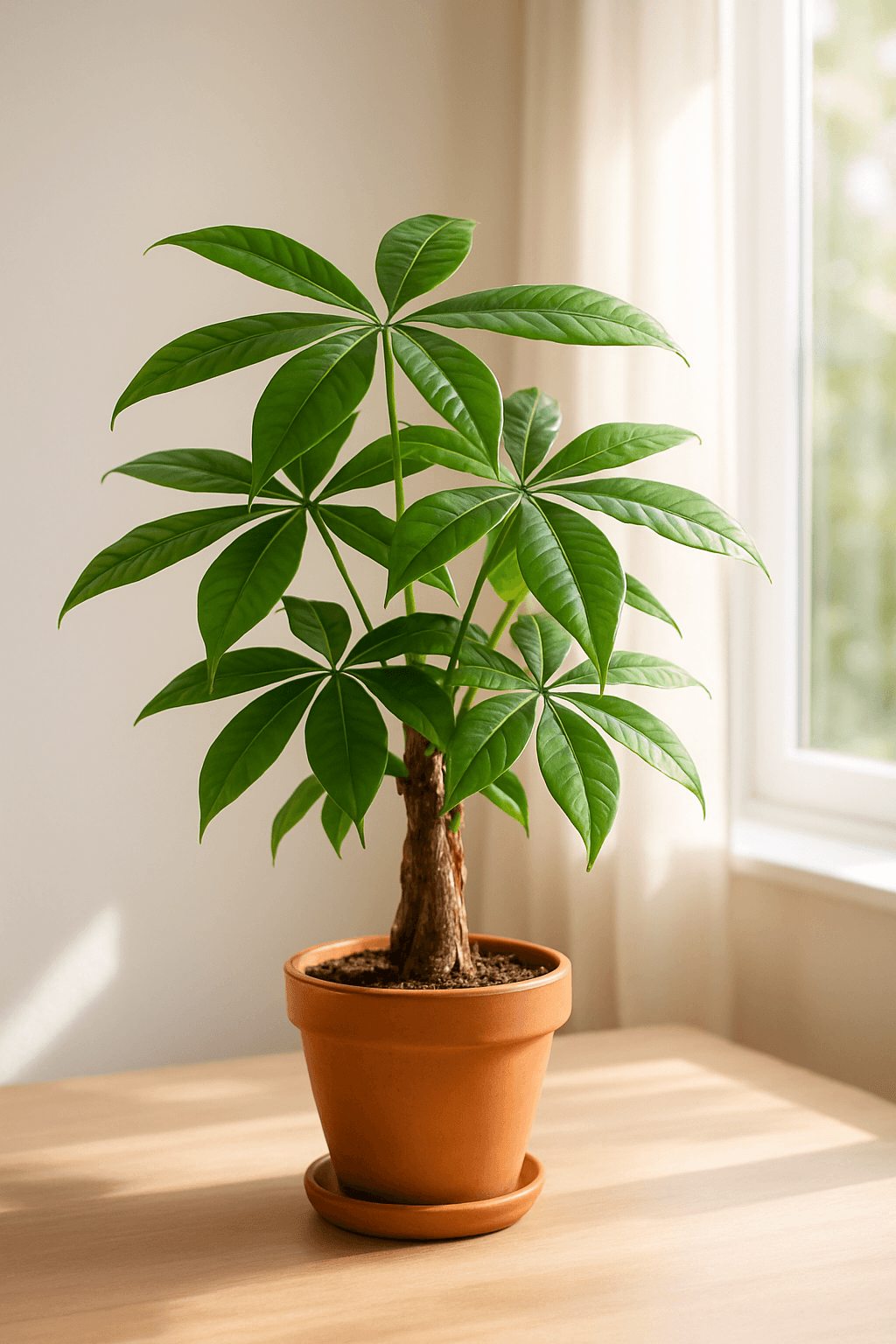
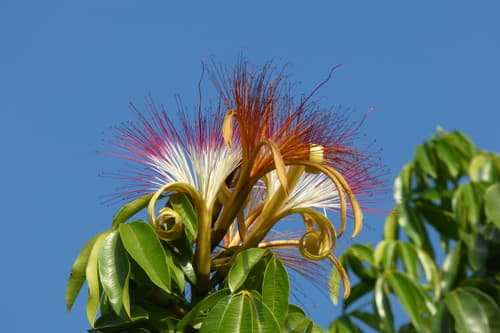
Quick Answer
The number one way people kill a money tree is overwatering it — yellowing leaves are your warning sign, and most people ignore them until it's too late. This plant wants to dry out a bit between waterings, and it needs a pot with real drainage to do that. Get those two things right and money tree care is genuinely straightforward.
⭐Difficulty
Easy–Moderate
☀️Light
Bright indirect
💧Watering
Every 1–2 weeks
🌫️Humidity
Medium–High (50–60%)
🌡️Temperature
60–85°F
📈Growth Rate
Moderate
Toxicity
Source: ASPCA Animal Poison Control
Watering
Summer
Every 1–2 weeks
Winter
Every 2–3 weeks
Method: Soak and let drain; allow top 2 inches to dry
The method matters as much as the frequency. Water thoroughly — soak the soil until water flows freely from the drainage hole, then stop. Don't let the pot sit in that runoff; empty the saucer after 30 minutes. Before you water again, stick your finger 2 inches into the soil. If it still feels damp, wait. In summer, that check usually lands you on a roughly every 1–2 week schedule. In winter, when growth slows and evaporation drops, you'll likely stretch to every 2–3 weeks. Signs you're overwatering: Yellow leaves starting from the lower part of the plant, soft or mushy stems near the base, and soil that smells off. If you see these, let the plant dry out completely before the next watering and check that your drainage hole isn't clogged. Signs you're underwatering: Leaves that look slightly wilted or curl inward, dry crispy edges (not just tips), and soil pulling away from the pot edges. A good thorough soak usually bounces the plant back within a day.
Light Requirements
Bright indirect
Money trees do best in bright indirect light — an east-facing windowsill or 2–3 feet back from a south or west window hits the sweet spot. If your space only gets medium light, the plant will survive but growth slows noticeably; a full-spectrum grow light positioned 6–12 inches above the canopy will compensate well during darker months.
Soil & Potting
Soil: Well-draining sandy loam or cactus mix
Pot: Heavy pot with drainage (can tip over when tall)
Temperature & Humidity
Temperature: 60–85°F (16–29°C)
Humidity: Medium–High (50–60%)
Fertilizing
Frequency: Monthly spring/summer; skip winter
Type: Balanced liquid fertilizer, diluted
Common Problems
Yellow Leaves → Overwatering Yellow leaves — especially when they appear on multiple leaves at once and feel a little soft — almost always mean too much water. Pull the pot and check the drainage hole first; if it's blocked, that's your culprit even if your watering schedule seemed reasonable. Let the soil dry out completely, fix the drainage, and cut back your watering frequency by a few days — you should see new healthy growth within a few weeks.
Leaf Drop → Drafts, Temperature Swings, or Overwatering If leaves are dropping suddenly and in quantity, think about what changed in the plant's environment recently. Money trees are sensitive to cold drafts from open windows, air conditioning vents, and being moved to a colder room — even a few degrees of consistent chill can trigger a drop. Move it to a stable spot between 65–80°F, away from vents and exterior doors, and give it two to three weeks to settle before you panic.
Brown Edges → Low Humidity Crispy brown edges that creep inward from the leaf margins are a humidity problem, not a watering problem — don't increase how often you water to compensate. Money trees want 50–60% humidity, which is higher than most homes in winter. Group it with other plants, set it on a pebble tray with water below the drainage hole, or run a small humidifier nearby — within a few weeks new leaves should come in without the browning.
Leggy Growth → Insufficient Light If your money tree is producing long, stretched stems with wide gaps between leaves, it's reaching for more light. Move it to a brighter spot — ideally within 2–3 feet of a south or west-facing window — and rotate the pot a quarter turn every couple of weeks so growth stays even. You won't fix the existing leggy stems, but new growth will come in compact and full once the light is right. ---
Propagation
Stem cuttings are the most reliable method for home growers. Cut a 4–6 inch stem just below a leaf node, remove the lower leaves, and let the cut end callous for an hour or two before placing it in a small cup of water or moist perlite. Keep it in bright indirect light and change the water every few days if you're rooting in water — roots usually appear in 3–6 weeks. The thing that trips most people up: cutting a stem with no leaf nodes on it. You need at least one node — that small bump or notch where a leaf attaches — for roots to develop. A beautiful leafy cutting with no nodes won't root no matter how long you wait.
Seasonal Care Calendar
🌸 Spring
Resume watering and fertilizing. Wipe down leaves. Good time to repot if needed.
☀️ Summer
Peak growth. Maintain consistent watering. Protect from air conditioning drafts.
🍂 Fall
Reduce fertilizing. Begin transitioning to a less frequent watering schedule.
❄️ Winter
Minimal watering. No fertilizer. Keep away from cold windows and heating vents.