Umbrella Plant Care Guide
Schefflera arboricola
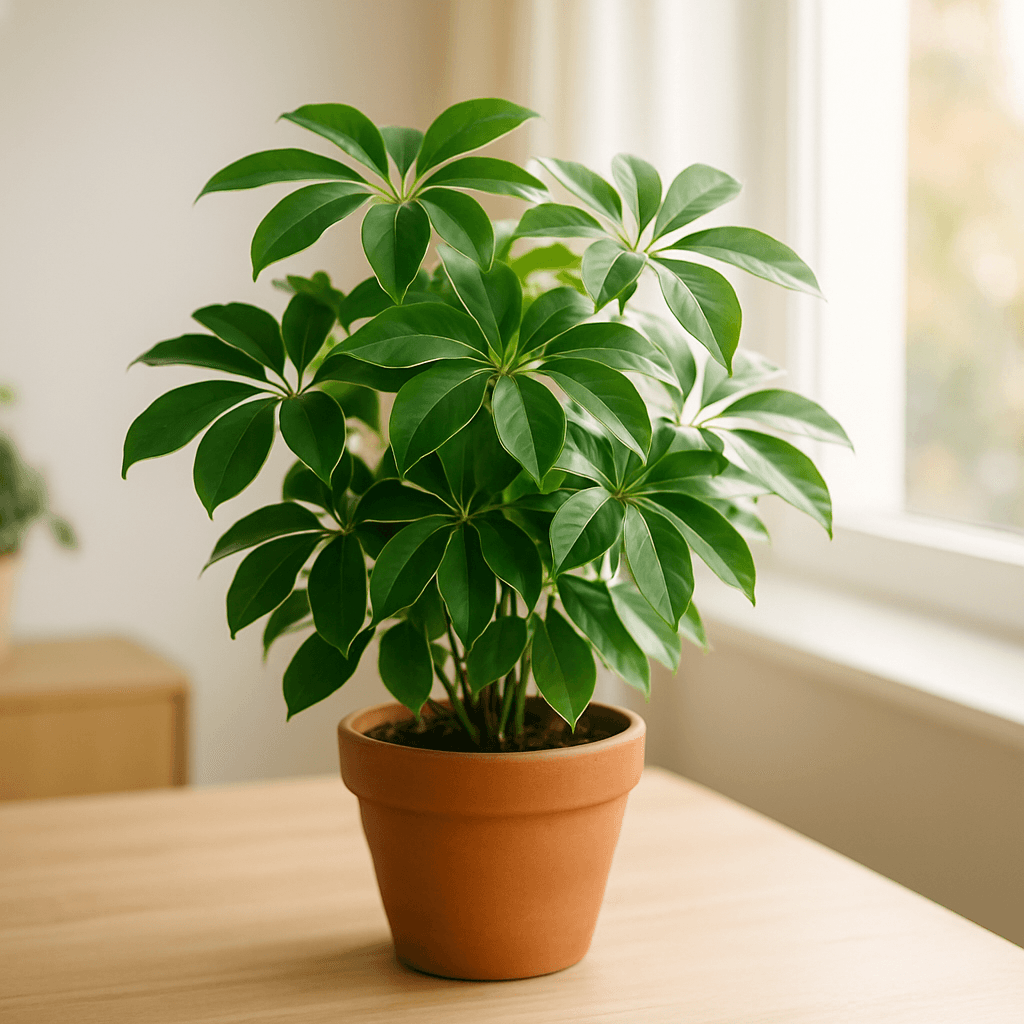
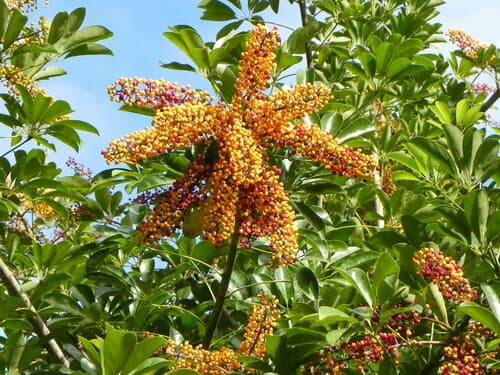
Quick Answer
Umbrella plant grows fast and can get leggy quickly — regular pruning keeps it compact and looking good. Cut stems back by a third in spring to encourage bushier branching. It's sensitive to overwatering, so let the top 2 inches dry before watering. The other common issue is leaf drop from overwatering, cold drafts, or low light — all easily fixed by addressing the cause and finding a stable bright spot.
⭐Difficulty
Easy–Moderate
☀️Light
Bright indirect
💧Watering
Every 1–2 weeks
🌫️Humidity
Low–Medium (40–50%)
🌡️Temperature
60–85°F
📈Growth Rate
Moderate
Toxicity
Source: ASPCA Animal Poison Control
Watering
Summer
Every 1–2 weeks
Winter
Every 2–3 weeks
Method: Allow top inch to dry between waterings
In summer, water umbrella plant approximately every 1–2 weeks; in winter cut back to every 2–3 weeks. Rather than following a calendar, allow the top inch to dry between waterings. Water thoroughly until it drains from the bottom, then don't water again until the soil passes the dryness check. Yellow leaves often signal overwatering; drooping with dry soil means it needs water now.
Light Requirements
Bright indirect
Umbrella plant does best 2–3 feet from a south- or east-facing window, screened from direct midday sun. Bright indirect light keeps the growth compact and the leaves large. In lower light, the plant becomes leggy and stems stretch toward the light source. Move it meaningfully closer to a window rather than just a few inches if you notice this happening.
Soil & Potting
Soil: Well-draining potting mix
Pot: Heavy pot with drainage
Temperature & Humidity
Temperature: 60–85°F (16–29°C)
Humidity: Low–Medium (40–50%)
Fertilizing
Frequency: Monthly spring/summer; skip winter
Type: Balanced liquid fertilizer, half strength
Common Problems
Leaf drop
Leaf drop → Overwatering, low light, or drafts. Umbrella plants drop leaves in response to consistent overwatering, insufficient light, or cold air from drafts or air conditioning. Identify which factor is at play — check the soil moisture, the light level, and whether there's a nearby draft source — then address it. Once conditions stabilise, the plant stops dropping and produces new leaves.
Yellow leaves
Yellow leaves → Overwatering. Allow soil to dry more. Catching the problem early makes it much easier to fix than waiting until the plant is in serious distress. Check the soil — if it's wet, hold off entirely until it dries out. If roots look brown and mushy, unpot, trim affected roots, and repot in fresh well-draining mix.
Brown tips
Brown tips that aren't soft usually come from low humidity or fluoride in tap water. Try switching to filtered or rainwater and raising local humidity with a pebble tray. Existing brown tips won't green up, but new growth will be clean once the cause is addressed.
Leggy growth
Leggy growth → Insufficient light. Move to brighter spot. Umbrella plants naturally reach for more light and become tall and sparse without pruning. Cut stems back by one-third in spring to force branching. Simultaneously, increase light to prevent the new growth from immediately reaching again.
Propagation
Umbrella plant propagates well by stem cuttings. Take a 4–6 inch cutting with at least one node, remove the lower leaves, and place in water or directly into moist potting mix. In water, roots appear within 3–4 weeks; pot up once they reach an inch. Air layering is another option for larger specimens — make a notch in a healthy stem, pack with moist sphagnum moss, wrap with plastic film, and roots develop in 4–8 weeks. The common mistake: taking cuttings with no node — without at least one node, the cutting will not root.
Seasonal Care Calendar
🌸 Spring
Spring is the ideal time to prune umbrella plant hard — cut stems back by one-third to encourage branching and a bushier shape. Increase watering as the plant comes into active growth, and begin fertilising every 2–4 weeks with a balanced liquid fertiliser. This is also the best time to take stem cuttings for propagation.
☀️ Summer
Summer is peak growing season. Water more frequently but check the soil rather than going on a fixed schedule. Umbrella plants grow fast in good conditions in summer — pinch or prune regularly to maintain your preferred shape.
🍂 Fall
Growth slows as light decreases. Reduce watering slightly, stop fertilising by late October, and move it closer to a window to compensate for shorter days. Avoid temperature fluctuations from open windows and heating systems.
❄️ Winter
In winter, umbrella plant slows significantly. Water less frequently and ensure it's not sitting in a cold draft near a window or door. Heated indoor air is dry — a pebble tray helps. Don't be alarmed by slightly slower growth; it resumes vigorously in spring.