Croton Care Guide
Codiaeum variegatum
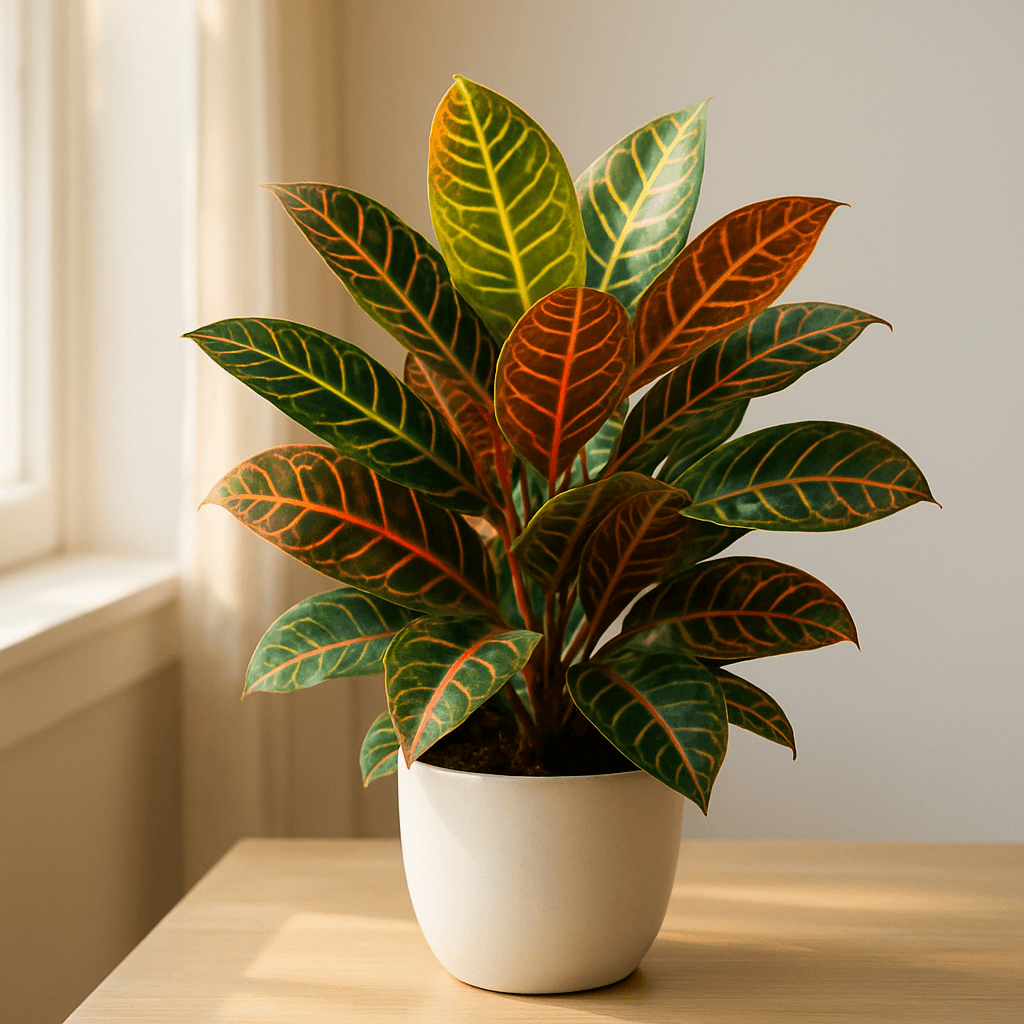
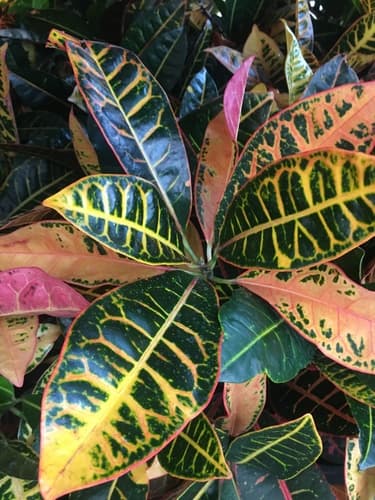
Quick Answer
The number one mistake people make with crotons is moving them. Pick a permanent spot before you bring one home, because every time you relocate it — even across the room — it responds by dropping leaves dramatically. Get that right, and the rest of croton care falls into place.
⭐Difficulty
Moderate–Hard
☀️Light
Bright indirect to direct
💧Watering
Every 1 week
🌫️Humidity
Medium–High (40–70%)
🌡️Temperature
60–85°F
📈Growth Rate
Moderate
Toxicity
Source: ASPCA Animal Poison Control
Watering
Summer
Every 1 week
Winter
Every 1–2 weeks
Method: Keep soil consistently moist; water when top inch dries
Crotons like consistent moisture — not wet, not bone dry. Water when the top inch of soil dries out, which in summer means roughly once a week. In winter, that stretches to every 1–2 weeks as growth slows and the plant isn't drinking as actively. The best approach is to water thoroughly until it drains from the bottom, then let the pot drain completely before putting it back in its saucer. Never let it sit in standing water. Bottom-watering for 30 minutes works well if you find you're consistently over- or underwatering — it lets the soil absorb at its own pace. Signs of overwatering: yellowing lower leaves, soggy soil that stays wet for more than a week. Signs of underwatering: leaves that feel papery, curl slightly at the edges, or develop dry brown tips.
Light Requirements
Bright indirect to direct
Crotons need at least 6 hours of bright light daily, and the more direct sun they get, the more vivid those reds, oranges, and yellows become. Your best bet is a south- or west-facing windowsill where they can soak up direct afternoon sun — a spot that feels almost too bright for most houseplants is exactly right for a croton. If your windows can't deliver that, a full-spectrum grow light positioned 6–8 inches above the plant will compensate and keep the colors from fading to muddy green.
Soil & Potting
Soil: Rich, well-draining potting mix
Pot: Heavy pot with drainage
Temperature & Humidity
Temperature: 60–85°F (16–29°C)
Humidity: Medium–High (40–70%)
Fertilizing
Frequency: Monthly spring/summer
Type: Balanced fertilizer, half strength
Common Problems
Leaf drop → Moved plant, drafts, or stress. Keep in stable environment.
Fading colors → Insufficient light. Move to sunniest spot.
Yellow leaves → Overwatering or sudden temperature change.
Brown dry leaves → Underwatering or very low humidity.
Propagation
Croton propagation by stem cuttings works, but it's genuinely slow and a little finicky — don't try this on your only plant until you've kept it healthy for at least a year. Take a 4–6 inch cutting just below a leaf node using a clean, sharp blade, let the cut end sit out for 30–60 minutes so the milky sap seals over (skipping this step is what trips most people up), then plant it in moist perlite or a light seed-starting mix. Keep it in bright indirect light with a humidity dome or a plastic bag loosely over the top, and expect 4–6 weeks before you see any meaningful root development — patience is the whole game here.
Seasonal Care Calendar
🌸 Spring
Place in sunniest window. Resume fertilizing. Avoid moving — it will drop leaves.
☀️ Summer
Maximum sun for maximum color. Water and feed consistently. Avoid air conditioning drafts.
🍂 Fall
Reduce fertilizing. Move slightly closer to window as light intensity decreases.
❄️ Winter
Keep in maximum light. Minimal water. No fertilizer. Avoid any temperature below 55°F.