Bird's Nest Fern Care Guide
Asplenium nidus

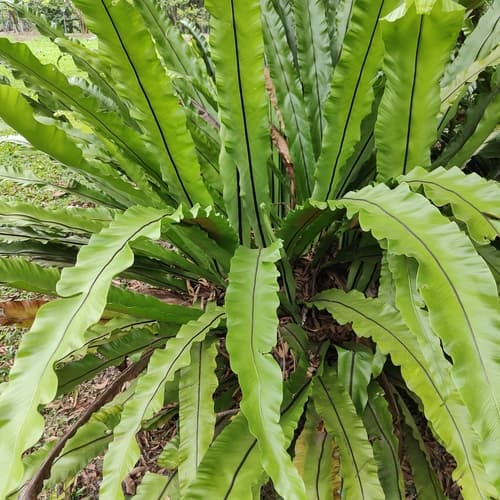
Quick Answer
Most bird's nest ferns die from one of two things: low humidity or water poured directly into the crown. Get those two details right — keep humidity above 50% and always water around the edges of the pot, never into the center rosette — and this plant is genuinely easy to keep alive and growing.
⭐Difficulty
Easy–Moderate
☀️Light
Low to medium indirect
💧Watering
Every 1 week
🌫️Humidity
High (50–70%)
🌡️Temperature
60–80°F
📈Growth Rate
Moderate
Toxicity
Source: ASPCA Animal Poison Control
Watering
Summer
Every 1 week
Winter
Every 1–2 weeks
Method: Keep moist; pour water around edges not center
Water every 7 days in spring and summer, and stretch that to every 10–14 days in winter when growth slows. The soil should stay consistently moist but never soggy — think wrung-out sponge, not wet clay. The one rule that matters most: pour water slowly around the rim of the pot, not into the center crown. Water pooling in that central rosette is the fastest way to rot the whole plant from the inside out. If you're using a watering can, angle it to target the soil only. Bottom-watering works well here too — set the pot in a tray of water for 30 minutes and let the soil drink from below, then drain fully. This keeps the crown completely dry and the roots evenly hydrated. If you see yellowing lower fronds, ease off the watering and check that your pot is draining properly. If fronds are going limp and the soil feels dry an inch down, you've waited too long — water thoroughly and consider adding a pebble tray with water underneath to boost ambient humidity.
Light Requirements
Low to medium indirect
Bird's nest ferns do best in low to medium indirect light — a north or east-facing windowsill is ideal, or 3–4 feet back from a south or west window where the light is bright but broken. Direct sun will bleach and scorch the fronds fast, so if your spot gets any direct rays in the afternoon, move the plant back or add a sheer curtain between it and the glass.
Soil & Potting
Soil: Well-draining, peat-free mix with bark
Pot: Any pot with drainage; self-watering works well
Temperature & Humidity
Temperature: 60–80°F (16–27°C)
Humidity: High (50–70%)
Fertilizing
Frequency: Monthly spring/summer; optional winter
Type: Balanced fertilizer, quarter strength
Common Problems
Brown, Crispy Frond Tips The edges of the fronds look dry and papery, starting at the tips and working inward. This is almost always a humidity problem — indoor air, especially in winter with heating running, drops well below the 50% this plant needs. Move it to a bathroom or kitchen where humidity is naturally higher, or place a humidifier within a few feet. You'll know it's working when new fronds emerge with clean, undamaged edges. That said, overwatering can cause similar browning, so check the soil before assuming it's humidity. If the soil is wet and the pot isn't draining well, pull it out, let it dry slightly, and repot into a better-draining mix before resuming your normal watering schedule.
Pale or Washed-Out Fronds The whole plant looks faded — fronds that should be deep, glossy green are turning yellowish or olive. That's too much light. Move the plant further from the window, or shift it to a north-facing spot entirely. Within a few weeks of the new fronds growing in, you'll see the color return to a richer green.
Propagation
Bird's nest ferns reproduce via spores, and honestly, it's a slow and finicky process that most home growers skip entirely — there's no practical way to divide or take cuttings from this plant. If you want to try spores, collect the brown spore-bearing strips (sori) from the underside of a mature frond, let them dry on a piece of paper for a week, then scatter them on the surface of moist peat-free seed-starting mix in a covered container. Keep the container somewhere warm and humid, and expect to wait several months before you see anything green. The thing that trips most people up is giving up too early — or opening the container too often and letting humidity escape. Spore germination is genuinely slow, and the first signs of growth look like a thin green film, not a tiny fern. Be patient, keep the lid on, and don't expect a recognizable plant for six months to a year.
Seasonal Care Calendar
🌸 Spring
Resume regular watering. Great time to move to a humid bathroom if available.
☀️ Summer
Maintain high humidity. New fronds grow rapidly in warm, humid conditions.
🍂 Fall
Reduce watering slightly as growth slows. Continue to avoid watering into the crown.
❄️ Winter
Use a humidifier nearby — indoor heating is the main challenge. Maintain consistent moisture.