Caladium Care Guide
Caladium bicolor
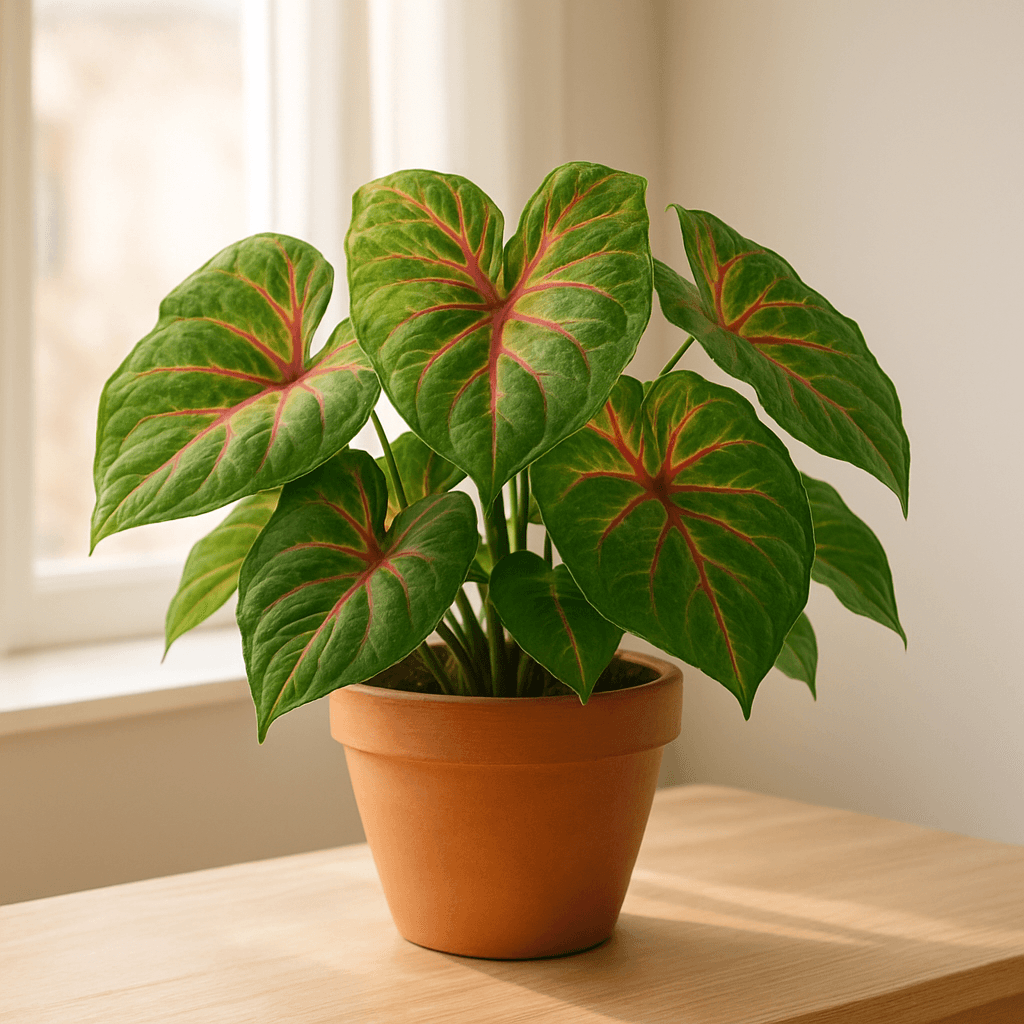
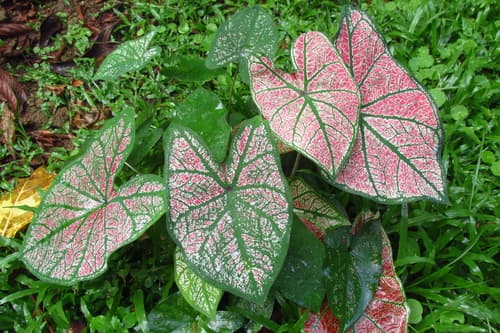
Quick Answer
Caladium is a seasonal plant with a built-in off switch — it goes fully dormant in fall and winter, dropping all its leaves and sitting as a tuber in dry soil for months. This is not death; it's the plant's natural cycle. Keep the soil evenly moist and in bright indirect light during the growing season, then taper off watering in fall and store the dry tuber in a warm spot until spring.
⭐Difficulty
Moderate
☀️Light
Bright indirect
💧Watering
Every 1 week
🌫️Humidity
High (60–80%)
🌡️Temperature
65–85°F
📈Growth Rate
Moderate (seasonal)
Toxicity
Source: ASPCA Animal Poison Control
Watering
Summer
Every 1 week
Winter
Dormant — do not water
Method: Keep moist in growing season; stop in fall
In summer, water caladium approximately every week; in winter, do not water — the tuber is dormant and sitting in moisture will rot it. Rather than following a calendar during the growing season, keep the soil evenly moist but never waterlogged. Water when the top inch of soil feels dry, then water thoroughly. Drooping with moist soil means roots may be struggling; drooping with dry soil is a simple thirst signal.
Light Requirements
Bright indirect
Caladium does best 2–3 feet from a south- or east-facing window, screened from direct midday sun. Direct sun scorches the large, tissue-thin leaves quickly. A sheer curtain is fine for filtering harsh afternoon sun. Caladium adapts to lower light but the leaf colours fade significantly — bright indirect is what keeps those reds, pinks, and whites vivid.
Soil & Potting
Soil: Rich, moist, well-draining mix
Pot: Any pot with drainage
Temperature & Humidity
Temperature: 65–85°F (18–29°C)
Humidity: High (60–80%)
Fertilizing
Frequency: Monthly spring/summer
Type: Balanced fertilizer, half strength
Common Problems
Fading colors
Fading colors → Insufficient light. Move to brighter spot. Caladium's dramatic leaf markings are directly tied to light levels — without enough bright indirect light, the contrast between colours washes out within a few weeks. Move the plant meaningfully closer to a window rather than just a few inches. Colours won't recover on existing leaves, but new growth will come in vibrantly once light improves.
Yellow or soggy leaves
Yellow or soggy leaves → Overwatering. Catching the problem early makes it much easier to fix than waiting until the plant is in serious distress. Check the soil — if it's consistently wet, hold off entirely until it dries out. If roots look brown and mushy, unpot, trim affected roots, and repot in fresh mix.
Brown edges
Brown edges that aren't soft usually come from low humidity or cold air. Caladiums are tropical and struggle below 60°F — keep them away from air conditioning vents and cold drafts. Raise local humidity with a pebble tray or humidifier.
Leaves dying back
Leaves dying back in fall → Normal dormancy. This is not a problem — it's the plant completing its natural cycle. Stop watering, let the foliage die back completely, then store the dry tuber in a paper bag or pot of dry soil in a warm spot (around 60–65°F) until spring.
Propagation
Caladium propagates by tuber division. In spring, when you unpot an established plant, you'll often find the main tuber has produced smaller offsets attached to it. Carefully separate these with a clean knife, making sure each piece has at least one visible growing eye (bump). Dust cut surfaces with cinnamon to prevent rot, then plant each piece in moist mix with the eye facing up, about 2 inches deep. Keep warm (above 70°F) and in bright indirect light. New shoots emerge in 2–4 weeks. The common mistake: dividing tubers that are too small or don't have a visible eye — those won't sprout.
Seasonal Care Calendar
🌸 Spring
Spring is when caladium tubers wake up and push new growth. Resume watering — start with a light soak once you see growth emerging. Begin fertilising every 2–4 weeks with a balanced liquid fertiliser as leaves develop. This is also the time to repot if the tuber has grown significantly, and to divide large tubers if you want more plants.
☀️ Summer
Summer is peak growing season — caladium displays its most vibrant colours and largest leaves in warm, humid summer conditions. Water regularly (keeping soil evenly moist), feed every 2 weeks, and maintain humidity above 50%. If you move it outdoors to a shaded spot, the colours can be stunning.
🍂 Fall
As temperatures cool in fall, caladium naturally begins to decline. Leaves will yellow and drop — this is the signal to start tapering off watering. Reduce watering frequency, stop fertilising, and let the plant begin its transition to dormancy naturally rather than trying to keep it going.
❄️ Winter
Winter is full dormancy for caladium. Do not water at all — the tuber sits dry. Store the pot in a warm location (not below 55°F) and simply wait. Some people remove the tuber and store it in a paper bag of dry perlite in a closet. Either method works; just keep it warm and completely dry.