Rubber Plant vs Fiddle Leaf Fig: Which Is Easier?
Rubber plant is significantly easier than fiddle leaf fig — it's not a close comparison. Ficus elastica tolerates moderate light, bounces back from missed waterings, and adapts when you move it. Fiddle leaf fig (Ficus lyrata) drops leaves when disturbed, hates drafts, and sulks in anything below bright indirect light. Both make a visual statement, but only one is genuinely forgiving.

Rubber Plant vs Fiddle Leaf Fig: At a Glance
Both are large Ficus plants that can reach ceiling height indoors, but they have very different care requirements.
Rubber plant (Ficus elastica): bright indirect to moderate light, water every 1–2 weeks in summer and every 2–3 weeks in winter, difficulty easy-to-moderate. Fiddle leaf fig (Ficus lyrata): needs consistent bright indirect light, water every 1–2 weeks in summer and every 2–3 weeks in winter, difficulty hard.
The watering schedule looks the same on paper, but fiddle leaf fig punishes environmental inconsistency in ways rubber plant doesn't. Move a rubber plant to another room and it adjusts. Move a fiddle leaf fig and it may drop half its leaves.
Rubber Plant: What You Need to Know
Rubber plant (Ficus elastica) earns its easy-to-moderate rating honestly. It grows in moderate to bright indirect light and handles a few hours of morning direct sun. Water when the top inch of soil dries out, roughly every 1–2 weeks in summer and every 2–3 weeks in winter. Low humidity (40–50%) is no problem.
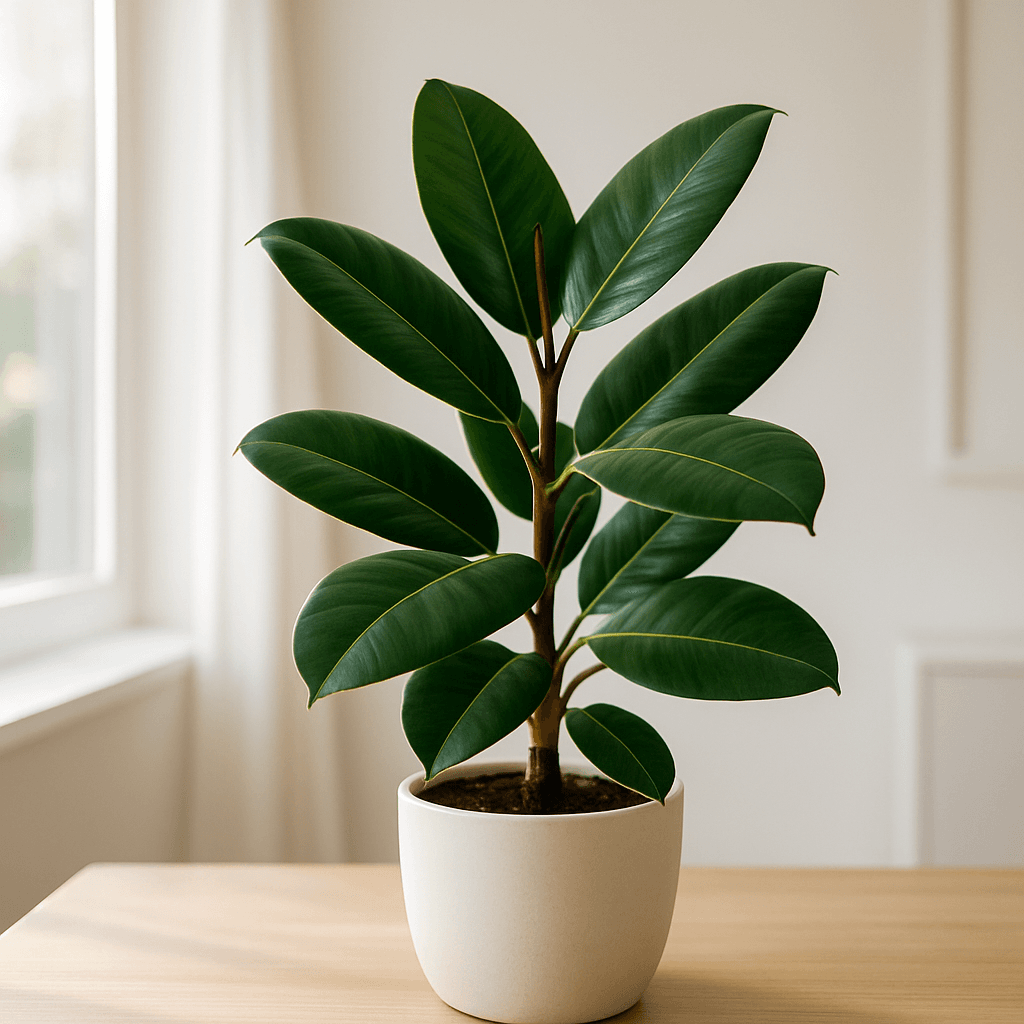
The deep burgundy-to-dark-green glossy leaves grow quickly in bright conditions — up to a foot per year. Wipe the leaves with a damp cloth occasionally; dust blocks light absorption and dulls the shine.
Not safe for cats or dogs. The milky latex sap contains ficin and ficusin, which irritate skin and mucous membranes (ASPCA).
Fiddle Leaf Fig: What You Need to Know
Fiddle leaf fig (Ficus lyrata) needs consistent bright indirect light, ideally from a south- or east-facing window, for at least 6 hours per day. Anything less and it stalls, drops leaves, or both.
Water every 1–2 weeks in summer when the top 2 inches of soil are dry, pulling back to every 2–3 weeks in winter. Medium-to-high humidity (30–65%) helps prevent brown leaf edges. Here's the critical part: don't move it. Fiddle leaf fig reacts to location changes, temperature swings, and drafts by dropping leaves — sometimes several at once.
Also toxic to cats, dogs, and humans. The latex sap causes skin irritation and GI upset (ASPCA).
What Actually Sets Them Apart?
Difficulty is the defining difference. Rubber plant is resilient — it adapts to new locations, forgives dry soil, and grows new leaves steadily. Fiddle leaf fig demands consistency: same spot, same light, same watering schedule, same humidity.
Light requirements also differ in practice. Rubber plant grows in moderate light, several feet from a window. Fiddle leaf fig needs to be close to a bright window — put it across a dark living room and it slowly declines.
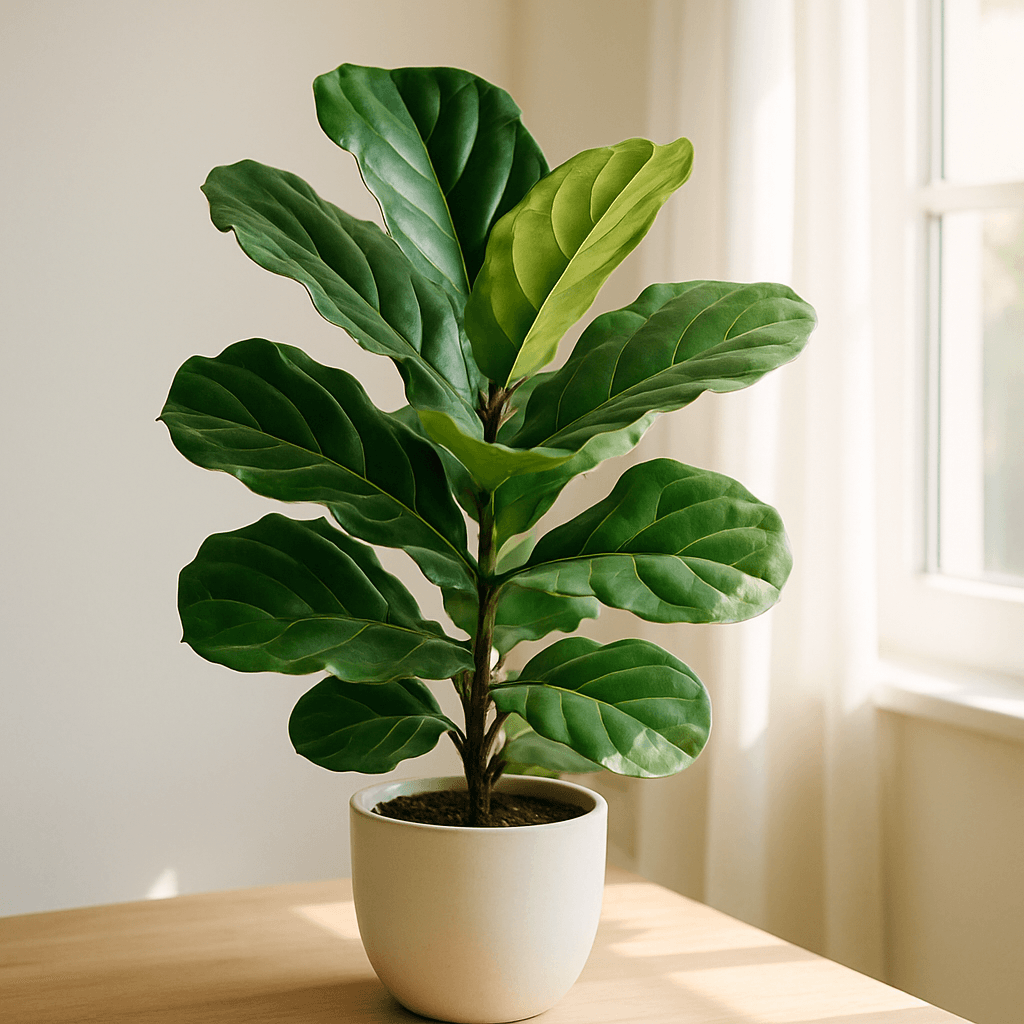
Size and shape: both reach 6–8 feet indoors, but rubber plant's leaves are broad and glossy in a branching tree form, while fiddle leaf fig grows taller and thinner with large paddle-shaped leaves. Rubber plant is easier to shape through pruning.
Both are toxic to cats and dogs.
Which Should You Choose?
For most people: rubber plant. It grows quickly, adapts to the spaces most people actually have, and doesn't demand the near-perfect conditions fiddle leaf fig requires. If you've killed a fiddle leaf fig before, rubber plant gives you the same large-leaf statement-tree look without the drama.
Choose fiddle leaf fig only if you have a genuinely bright room with consistent light, stable temperatures, and you're willing to keep it in one spot permanently. It's a beautiful plant when conditions are right, but those conditions are harder to maintain than most people expect.
If you have cats or dogs, skip both. The Ficus genus is toxic to pets.
The Bottom Line
Rubber plant is the clear winner for most people: faster-growing, more adaptable, and far more forgiving. Fiddle leaf fig rewards growers who can give it a bright, stable, permanent spot — but that's a harder ask than it sounds.
Frequently Asked Questions
Why does my fiddle leaf fig keep dropping leaves?▾
The most common cause is a location or condition change — moving the pot, a nearby draft, or inconsistent watering. Fiddle leaf figs react to stress by shedding leaves. If you've recently moved it, give it 4–6 weeks to adjust without further changes. Overwatering causes brown spots and leaf drop; underwatering causes dry brown edges before leaves fall.
Can a rubber plant grow in low light?▾
Rubber plant tolerates moderate light better than most large houseplants, but low light genuinely slows it down. Growth nearly stops and dark-leaved cultivars lose their rich colour. It won't die in low light, but a few hours of bright indirect light per day makes a visible difference.
Are rubber plants and fiddle leaf figs safe for pets?▾
Neither is safe for cats or dogs. Both are Ficus species containing sap that causes skin irritation and GI upset (ASPCA). If you have pets that chew on plants, skip both. Bird of paradise is a pet-safe large-statement-plant alternative.
Which grows faster, rubber plant or fiddle leaf fig?▾
Rubber plant grows faster, particularly in its first few years — up to a foot or more per year in bright conditions. Fiddle leaf fig grows at a moderate rate when conditions are right, but any stress pauses growth for weeks. Rubber plant is the better choice if you want to see visible progress.