Calathea vs Prayer Plant: Same Family, Different Needs?
Prayer plant is easier than calathea. Maranta leuconeura tolerates humidity as low as 50% and recovers from occasional tap water without complaint. Calathea demands 60%+ humidity consistently and reacts to fluoride in tap water with brown, crispy leaf edges. Both fold their leaves upward at night in a movement called nyctinasty. Both are safe for cats and dogs.

Calathea vs Prayer Plant: At a Glance
Calathea and prayer plant (Maranta leuconeura) are related plants in the Marantaceae family. Care requirements are similar but not identical.
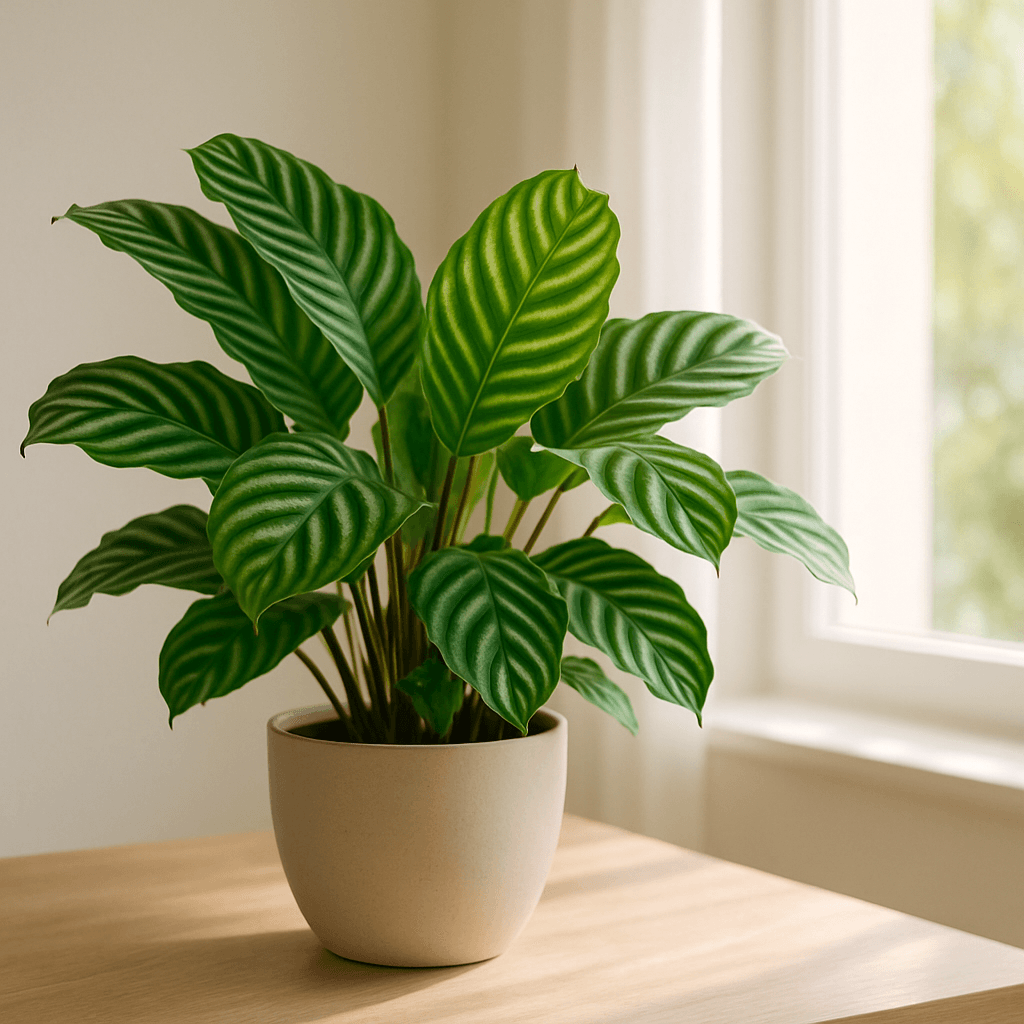
Calathea (commonly C. orbifolia, C. lancifolia, or C. medallion): low to medium indirect light, water every week in summer and every 1–2 weeks in winter, difficulty moderate-to-hard, high humidity (60%+), pet-safe. Prayer plant (Maranta leuconeura): low to medium indirect light, water every week in summer and every 1–2 weeks in winter, difficulty moderate, medium-high humidity (50–60%+), pet-safe.
On paper the difference looks small. In practice, calathea punishes dry air and tap water in ways prayer plant doesn't.
Calathea: What You Need to Know
Calathea's appeal is in its leaves: dramatic patterns in green, white, pink, and purple that look painted rather than grown. The leaf-folding movement at night adds to the appeal. Getting those leaves to stay pristine is the challenge.
Humidity below 60% causes brown, crispy leaf edges that spread inward over time. Once browned, they don't recover — prevention is the only fix. A humidifier running nearby is the most reliable solution; pebble trays help but rarely maintain 60% humidity in a dry room.
Water quality matters as much as humidity. Fluoride and chlorine in tap water cause tip burn and brown spotting. Use filtered water, rainwater, or tap water left out 24 hours to off-gas chlorine.
For beginners: C. lancifolia and C. orbifolia are more tolerant than C. makoyana or the white fusion varieties.
Prayer Plant: What You Need to Know
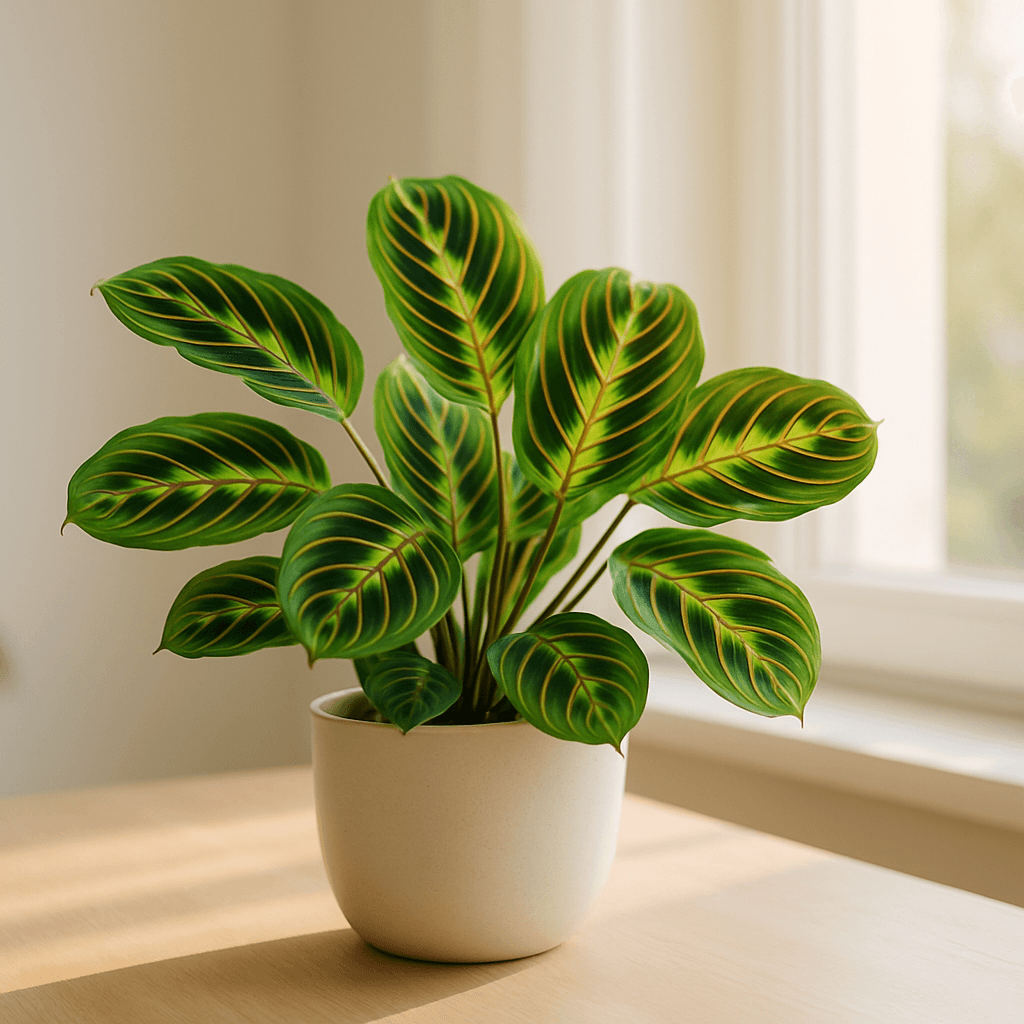
Prayer plant (Maranta leuconeura) produces oval leaves with distinctive red veins and green markings that fold upward at night, resembling hands in prayer. It's one of the most dramatic examples of plant movement visible to the naked eye.
Care is noticeably more forgiving than calathea. Prayer plant handles humidity from 50–60%, which most homes achieve naturally without a humidifier. It tolerates occasional tap water better than calathea, though filtered water still produces fewer brown tips over time.
Water when the top inch of soil is dry, roughly every week in summer and every 1–2 weeks in winter. It trails naturally and looks excellent in a hanging basket. Pet-safe for cats and dogs.
What Actually Sets Them Apart?
Humidity tolerance is the real difference. Calathea needs 60%+; prayer plant manages at 50%+. In a typical home without a humidifier, heated-room humidity in winter drops to 30–40%. Calathea struggles there. Prayer plant copes.
Water quality sensitivity follows a similar pattern. Calathea reacts to fluoride and chlorine in tap water with visible tip burn. Prayer plant is more resilient, though filtered water still helps.
Appearance: calathea offers more variety — dozens of species with dramatically different markings. Prayer plant is mostly available in the common Maranta leuconeura erythroneura (red-veined) and 'Kerchoveana' forms.
Both plants fold their leaves at night. Both are pet-safe. Both dislike direct sun and cold drafts.
Which Should You Choose?
Choose prayer plant if you want the dramatic leaf-folding behaviour and patterned foliage without strict humidity and water quality requirements. It's the better starting point for growers who don't yet have a humidifier or who live in a dry climate.
Choose calathea if you're after a specific pattern or colour that calathea species offer, and you're ready to invest in a humidifier and switch to filtered water. Start with C. lancifolia or C. orbifolia rather than the more demanding varieties.
Honestly, the key question is whether your home's humidity supports calathea without a humidifier — if not, prayer plant is the more reliable choice.
The Bottom Line
Prayer plant is the easier path to the patterned, leaf-folding aesthetic both plants share. Calathea offers more visual variety but demands 60%+ humidity and filtered water consistently. Start with prayer plant if your home is dry; move to calathea once you've added a humidifier.
Frequently Asked Questions
Why does my calathea have brown edges?▾
Brown edges on calathea are almost always caused by low humidity or fluoride in tap water. Below 60% humidity, the edges turn crispy and don't recover once browned. Switch to filtered or rainwater first, then address humidity with a humidifier if the problem persists. Brown spots or yellowing suggest overwatering rather than dry air.
Is prayer plant safe for cats?▾
Prayer plant is non-toxic and safe for cats and dogs. So is calathea. Both are good choices for households with pets. If you're choosing between them purely on pet safety, either works — use care difficulty and humidity tolerance to make the final decision.
Why does my prayer plant close its leaves at night?▾
Prayer plant folds its leaves upward at night in a movement called nyctinasty, driven by changes in light and internal water pressure in the leaf joints. It's completely normal and a sign of a healthy plant. Calathea does the same thing. The leaves reopen in the morning as light levels rise.
Can calathea and prayer plant grow in low light?▾
Both tolerate low light better than most houseplants. Growth slows and leaf patterns may fade slightly in dim conditions, but neither will die quickly in a low-light room. Medium indirect light produces richer colours and more active leaf folding. Avoid direct sun, which bleaches the leaf markings on both plants.