Boston Fern vs Maidenhair Fern: Care & Looks Compared
Boston fern is the more forgiving of the two, but neither is for low-effort growers. Boston fern (Nephrolepis exaltata) needs humidity above 60% and consistently moist soil, but recovers if conditions briefly lapse. Maidenhair fern (Adiantum spp.) drops its delicate fronds at the first sign of dry air or a missed watering, and doesn't always bounce back.

Boston Fern vs Maidenhair Fern: At a Glance
Both ferns are high-humidity plants that demand more consistent attention than most houseplants — but they're not equally demanding.
Boston fern (Nephrolepis exaltata): low to medium indirect light, keep soil consistently moist (check daily in warm months), difficulty moderate, high humidity (60–80%), pet-safe. Maidenhair fern (Adiantum spp., most commonly A. raddianum): low to medium indirect light, keep soil evenly moist but not waterlogged, difficulty hard, high humidity (60–80%+), pet-safe.
Both are pet-safe. The core difference is resilience: boston fern recovers from brief lapses in humidity or watering; maidenhair fern often doesn't.
Boston Fern: What You Need to Know
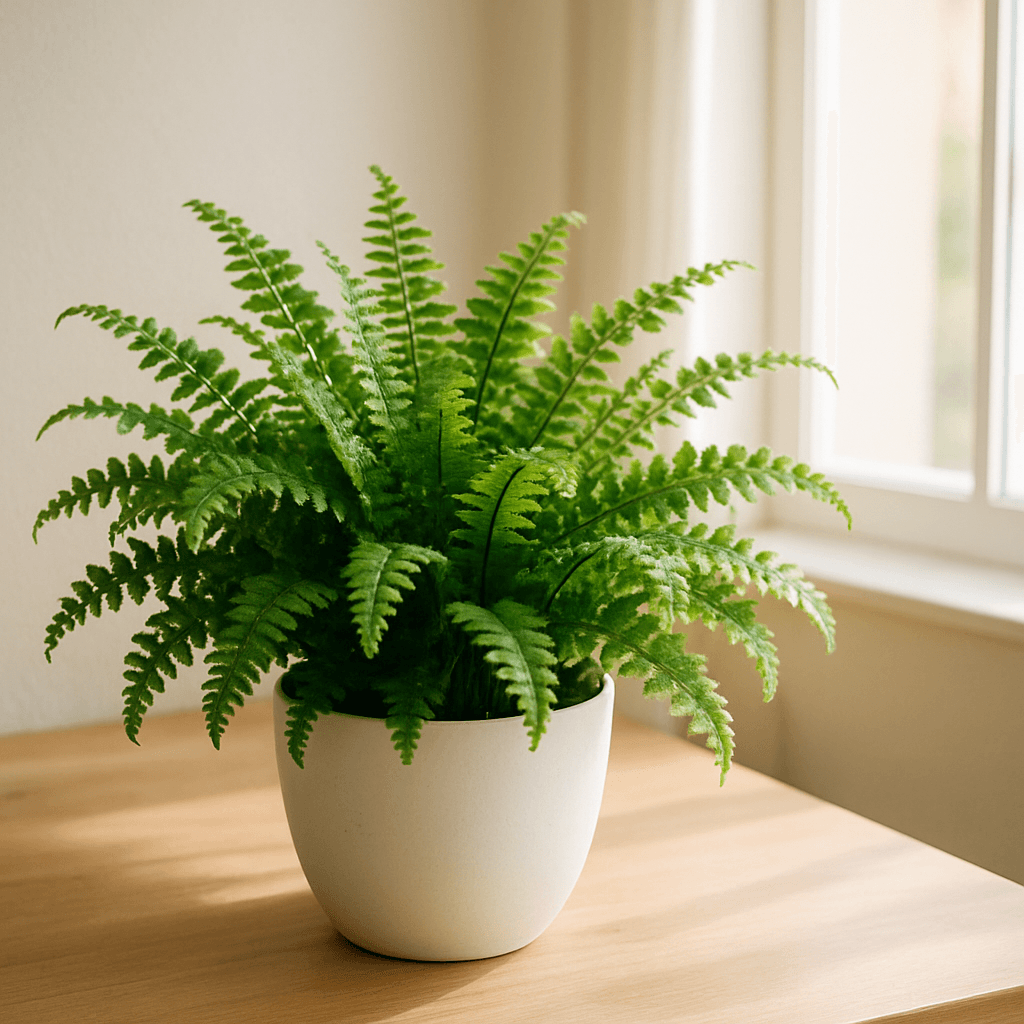
Boston fern is a classic hanging basket plant with arching, feathery fronds that can reach 3 feet across. It suits low to medium indirect light — a north- or east-facing window works well. Direct sun scorches the fronds.
Keep the soil consistently moist: the top inch should feel damp, not saturated. In warm months that may mean watering every 1–3 days. Let the soil dry out completely and the fronds turn yellow and drop — recovery is slow at best.
Humidity is the bigger challenge for most growers. Boston fern needs 60–80%; average heated-room humidity in winter often drops to 30–40%. A humidifier is the most effective solution. Pebble trays help but usually aren't enough on their own.
Pet-safe for cats and dogs.
Maidenhair Fern: What You Need to Know
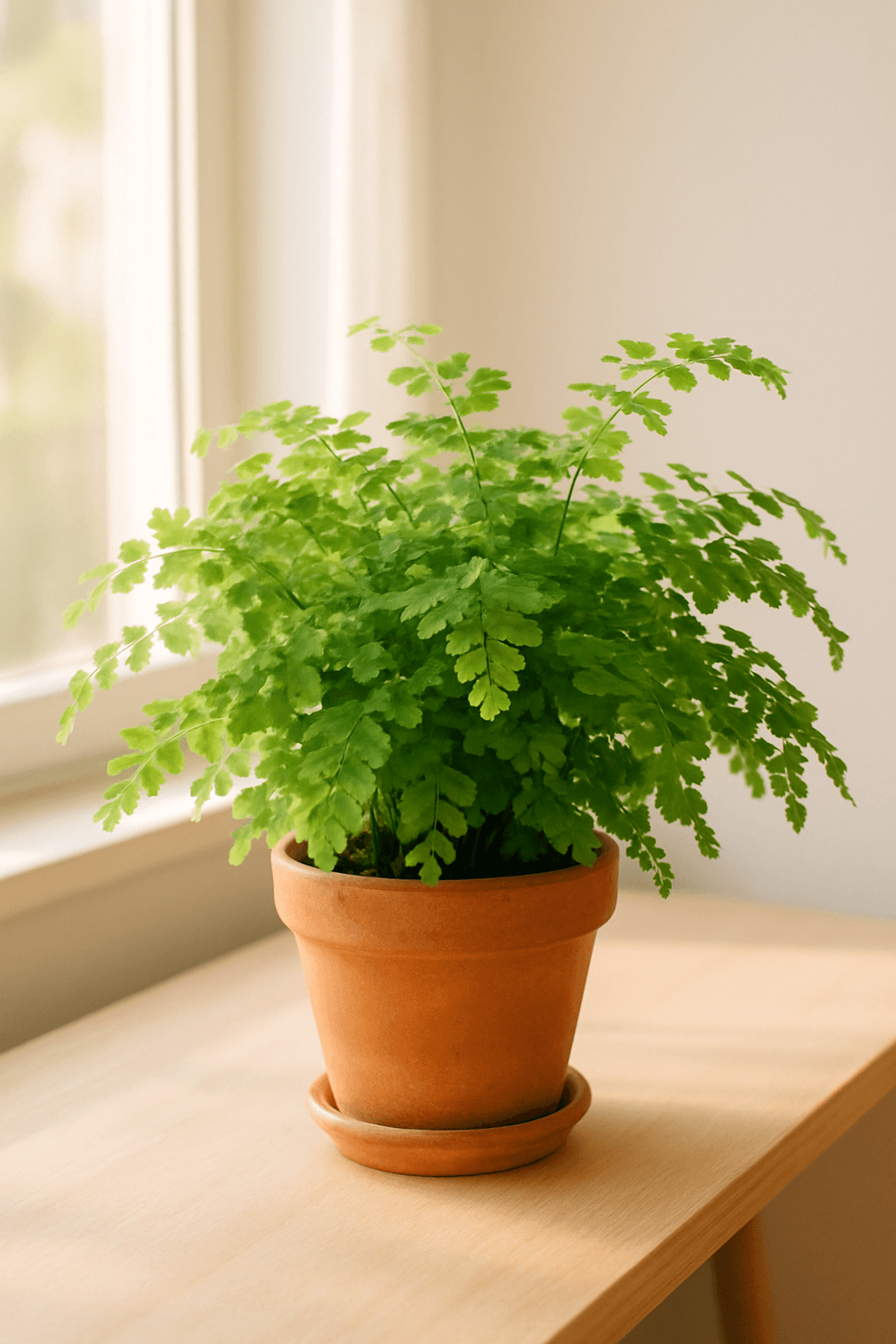
Maidenhair fern (Adiantum raddianum) produces delicate, fan-shaped leaflets on black wiry stems unlike any other common houseplant. Getting them to stay that way is the challenge.
Drafts are the first enemy. A cold draught from a window, an air conditioning vent, or a fan directed at the plant can cause frond drop within days. Keep it away from any air movement.
Dryness is the second. Maidenhair needs consistently moist soil and humidity above 60%, ideally higher. The moment humidity drops or soil dries out, fronds shrivel and drop. Unlike boston fern, maidenhair often won't recover fully — you may need to cut it back and wait for new growth from the base.
Bright bathrooms or closed terrariums are the most reliable indoor environment. Pet-safe.
What Actually Sets Them Apart?
Forgiveness. Boston fern recovers. Maidenhair often doesn't. Boston fern drops fronds if conditions lapse, but cutting back the plant and restoring humidity usually brings new growth within a few weeks. Maidenhair, once it drops its fronds from drought or cold, may not regenerate — some growers succeed by cutting all fronds to soil level and starting fresh, but it's not guaranteed.
Appearance is where maidenhair earns its reputation. Boston fern is full with classic sword-shaped fronds. Maidenhair is delicate and architectural, with paper-thin leaflets that catch light differently from any other fern.
Both are pet-safe and suit similar light conditions. The difference is purely the margin for error — with maidenhair, that margin is very small.
Which Should You Choose?
Choose boston fern if you want the full, hanging fern look without the extreme difficulty. It's achievable in a bathroom with a window, a kitchen above a sink, or any room where a humidifier runs regularly.
Choose maidenhair fern only if you can provide near-ideal conditions: consistent high humidity, no drafts, evenly moist soil, and indirect light from a stable position. A bright bathroom with daily showers is close to ideal. So is a semi-closed terrarium.
If you've killed a maidenhair fern before, that experience is the data point. Boston fern is the more reliable path to the delicate-fern aesthetic most people are after.
The Bottom Line
Boston fern is the achievable choice: recoverable if conditions lapse and reliable in a humid bathroom. Maidenhair fern is more beautiful but far less forgiving — match it to a bright, humid, draft-free spot or expect to struggle.
Frequently Asked Questions
Why does my maidenhair fern keep dying?▾
The most common cause is dry air. Maidenhair fern needs humidity above 60% consistently — most heated homes in winter drop to 30–40%. Even if you water correctly, dry air causes frond drop that looks like underwatering. A small humidifier running nearby is the most reliable fix. Drafts from windows, vents, or fans are the second most common cause and just as damaging.
Can I put a boston fern in my bathroom?▾
Yes, bathrooms are one of the best spots for boston fern. Steam from showers raises humidity naturally, and indirect light from a window provides enough for healthy growth. Maidenhair fern also does well in bright bathrooms — with more consistent results there than anywhere else in the house.
Are boston ferns and maidenhair ferns safe for cats?▾
Both are pet-safe and non-toxic to cats and dogs. If pet safety is a priority and you want a high-humidity plant, either fern is a reasonable choice. Factor in the humidity requirements, which are real regardless of whether pets are involved.
How often should I water a boston fern?▾
Keep the soil consistently moist — not waterlogged, but never fully dry. In warm months, check the top inch of soil daily and water when it feels barely damp rather than wet. That often means every 1–3 days. In winter, growth slows and soil dries more slowly, so every 2–3 days is more typical. A fern that droops and yellows has almost certainly been allowed to dry out.