Lucky Bamboo Care Guide
Dracaena sanderiana
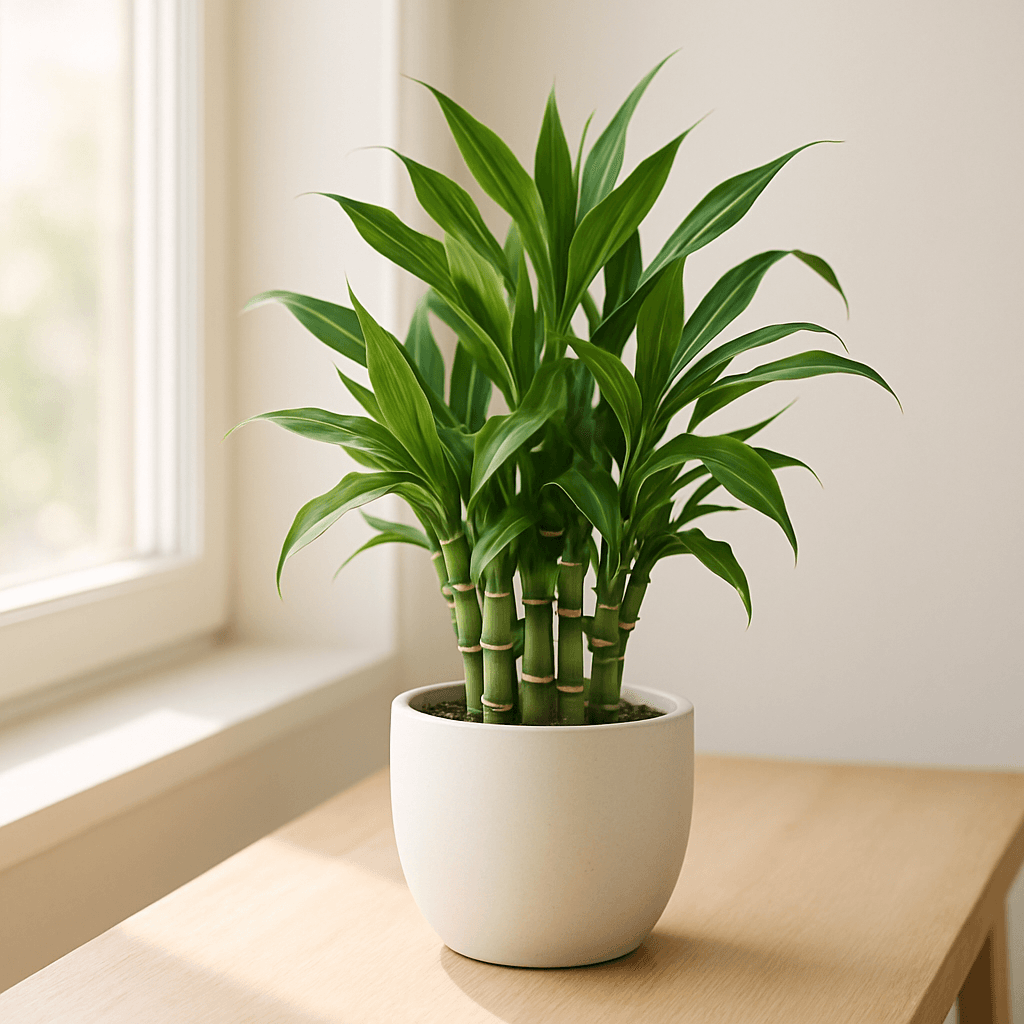
Quick Answer
Lucky bamboo isn't bamboo at all — it's a dracaena, and it shares that genus's known sensitivity to fluoride in tap water. Use filtered or distilled water every time, whether it's growing in water or soil, and keep it out of direct sun. Yellow stalks almost always mean tap water or too much light, not a watering problem. Change the water weekly and it'll thrive for years.
⭐Difficulty
Easy
☀️Light
Low to medium indirect
💧Watering
Change water weekly (water grown)
🌫️Humidity
Medium (40–60%)
🌡️Temperature
60–85°F
📈Growth Rate
Moderate
Toxicity
Source: ASPCA Animal Poison Control
Watering
Summer
Change water weekly (water grown)
Winter
Change water weekly
Method: Grow in water or well-draining soil
If growing in water, change the water weekly — this is the critical care step. Use filtered or distilled water every time; tap water fluoride causes the characteristic yellow discolouration. If growing in soil, allow the top inch to dry between waterings and use filtered water. Keep pebbles or stones holding the stalks upright in a vase clean by rinsing occasionally.
Light Requirements
Low to medium indirect
Lucky bamboo does best near an east- or north-facing window out of direct midday sun. Direct sun scorches the leaves quickly and yellows the stalks. It adapts well to lower light — making it one of the better choices for dim offices — but will grow a little faster with some indirect brightness. A sheer curtain over a brighter window filters light to a safe level.
Soil & Potting
Soil: Pebbles for support in vase, or standard well-draining mix
Pot: Tall vase or pot with drainage
Temperature & Humidity
Temperature: 60–85°F (16–29°C)
Humidity: Medium (40–60%)
Fertilizing
Frequency: Monthly (into water or soil)
Type: Liquid fertilizer, extremely diluted (1/10 strength)
Common Problems
Yellow stalks
Yellow stalks → Too much direct light or fluoride in water. Use filtered water. This is the most common lucky bamboo complaint and almost always a water quality issue. Switch to distilled or filtered water immediately. If a stalk has turned fully yellow, it won't recover — remove it to prevent rot from spreading, but the rest of the plant can be saved with clean water.
Brown tips
Brown tips → Fluoride or chlorine in tap water. Always use filtered water. Catching the problem early makes it much easier to fix than waiting until the plant is in serious distress. Switch water sources and trim brown tips with clean scissors. New growth will come in cleanly once water quality improves.
Algae in vase
Algae in vase → Too much light. Move to lower-light spot and clean vase. Green algae grows rapidly in water exposed to light. Move the plant further from the window, and clean the vase thoroughly with hot water and a small amount of bleach solution (rinse thoroughly). Changing the water weekly prevents algae from establishing.
Rotting stalks
Rotting stalks — remove; rinse roots; change water more frequently. A rotting stalk will turn soft and brown from the base up. Remove it immediately with a clean cut, rinse the healthy roots thoroughly, clean the vase, and refill with fresh filtered water. Check that the remaining water isn't sitting too long between changes.
Propagation
Lucky bamboo propagates by stem cuttings. Cut a healthy stalk just below a node (the raised ring around the stem), remove the lower leaves, and place the cutting in a clean vase of filtered water. Keep it in bright indirect light and change the water weekly. Roots appear from the nodes within 3–6 weeks. Once roots are 2+ inches long, it can be transferred to a soil setup or kept in water permanently. The common mistake: placing the cutting in direct sun, which stresses the fresh cutting before it has roots to support itself.
Seasonal Care Calendar
🌸 Spring
Spring is when lucky bamboo starts actively pushing new growth as day length increases. This is a good time to trim any yellowed leaves, reshape the arrangement if desired, and start a fresh water change routine if you've been inconsistent through winter.
☀️ Summer
Summer is peak growing season — lucky bamboo may push new leaf growth more actively. Change water weekly without fail; warm temperatures cause water to stagnate faster. Keep out of direct sun, which becomes more intense in summer, and watch for algae in the vase.
🍂 Fall
Lucky bamboo doesn't go dormant — maintain the same water-change schedule through fall. If you've had it outdoors in a sheltered spot, bring it inside before temperatures drop below 50°F. It dislikes cold.
❄️ Winter
In winter, lucky bamboo slows down slightly in terms of new growth but otherwise requires the same care. Heated indoor air is very dry in winter — if growing in soil, check soil moisture more carefully. If in water, continue weekly changes. Keep away from cold windowsill drafts.