Bromeliad Care Guide
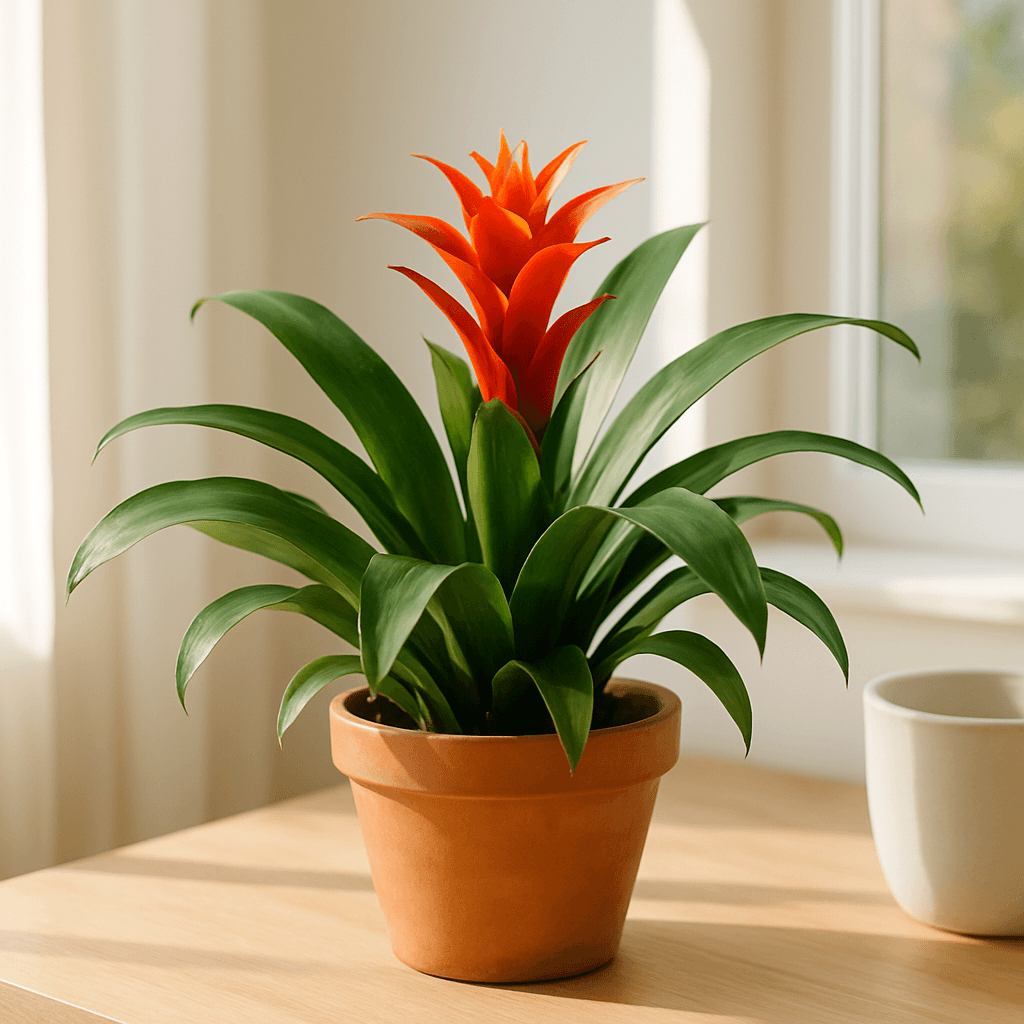
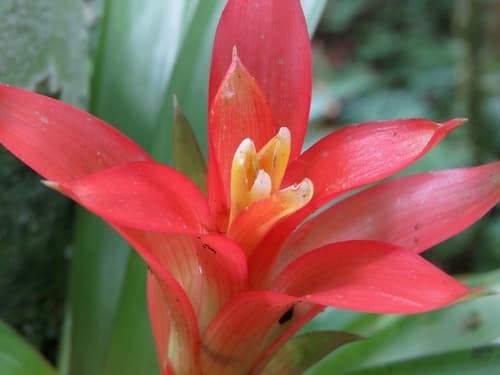
Guzmania lingulata
Quick Answer
The biggest mistake people make with bromeliads is ignoring the central cup — that's where this plant actually drinks from, and letting it dry out completely stresses the plant fast. Keep that cup filled with fresh water at all times, and flush it out every couple of weeks so it doesn't stagnate. Get that right, and bromeliads are genuinely forgiving houseplants.
⭐Difficulty
Easy–Moderate
☀️Light
Bright indirect
💧Watering
Every 1–2 weeks (fill center cup)
🌫️Humidity
Medium–High (50–70%)
🌡️Temperature
60–85°F
📈Growth Rate
Slow (blooms once then pups)
Toxicity
Source: ASPCA Animal Poison Control
Watering
Summer
Every 1–2 weeks (fill center cup)
Winter
Every 2–3 weeks
Method: Fill central cup; water soil occasionally
### The Central Cup — Your Main Job Bromeliads aren't like most houseplants. The central cup (also called the tank or vase) formed by the rosette of leaves is how the plant collects and absorbs water in the wild. Your job is to keep that cup about half to two-thirds full of water at all times. Every one to two weeks in spring and summer, pour fresh water directly into the center of the plant until the cup is filled. Every two to three weeks in fall and winter is usually enough. Don't just top it off each time — flush it out completely before refilling to prevent bacterial buildup and rot. If you notice a funky smell coming from the center, that's your sign to flush it immediately. Use room-temperature water. Bromeliads are sensitive to fluoride and salt buildup, so if your tap water is heavily treated, letting it sit overnight or using filtered water makes a difference.
Light Requirements
Bright indirect
Guzmania lingulata does best in bright indirect light — think 2 to 3 feet back from a south- or east-facing window where it gets strong ambient light without direct sun hitting the leaves. Direct sun bleaches and scorches the foliage quickly, but too little light means you'll wait forever for a bloom, so find the brightest spot that stays out of the sun's direct path.
Soil & Potting
Soil: Epiphytic mix (bark, perlite, peat)
Pot: Small pot with drainage; can grow on wood
Temperature & Humidity
Temperature: 60–85°F (16–29°C)
Humidity: Medium–High (50–70%)
Fertilizing
Frequency: Monthly during growing season (into cup)
Type: Bromeliad or orchid fertilizer, quarter strength
Common Problems
Center cup drying out → Needs water. Refill central tank.
Brown center after flower dies → Normal — plant is done. Wait for pups.
No blooms → Age or insufficient light. Take 12 months to bloom first time.
Mushy base → Overwatering soil. Reduce soil watering; use cup method.
Propagation
Wait until a pup is at least one-third the size of the parent plant before separating it — pulling them off too early is the number one thing that trips people up, and an undersized pup without enough root mass of its own usually just dies. When the pup is ready, use a clean, sharp knife to cut it away from the base of the parent, getting as much of its root structure as you can. Let the cut end dry out for an hour or two, then pot it into a small container with an epiphytic mix (bark, perlite, and a little peat). Set it in bright indirect light, fill its new central cup with water, and treat it exactly like a mature plant from day one.
Seasonal Care Calendar
🌸 Spring
Best time to find and pot up pups. Refill central cup regularly.
☀️ Summer
Peak growth for pups. Keep central cup filled with fresh water. Bright indirect light.
🍂 Fall
Pups continue growing. Reduce watering for soil but maintain tank water.
❄️ Winter
Pups grow slowly but steadily. Maintain tank water. No soil fertilizer in winter.