Anthurium Care Guide
Anthurium andraeanum
Quick Answer
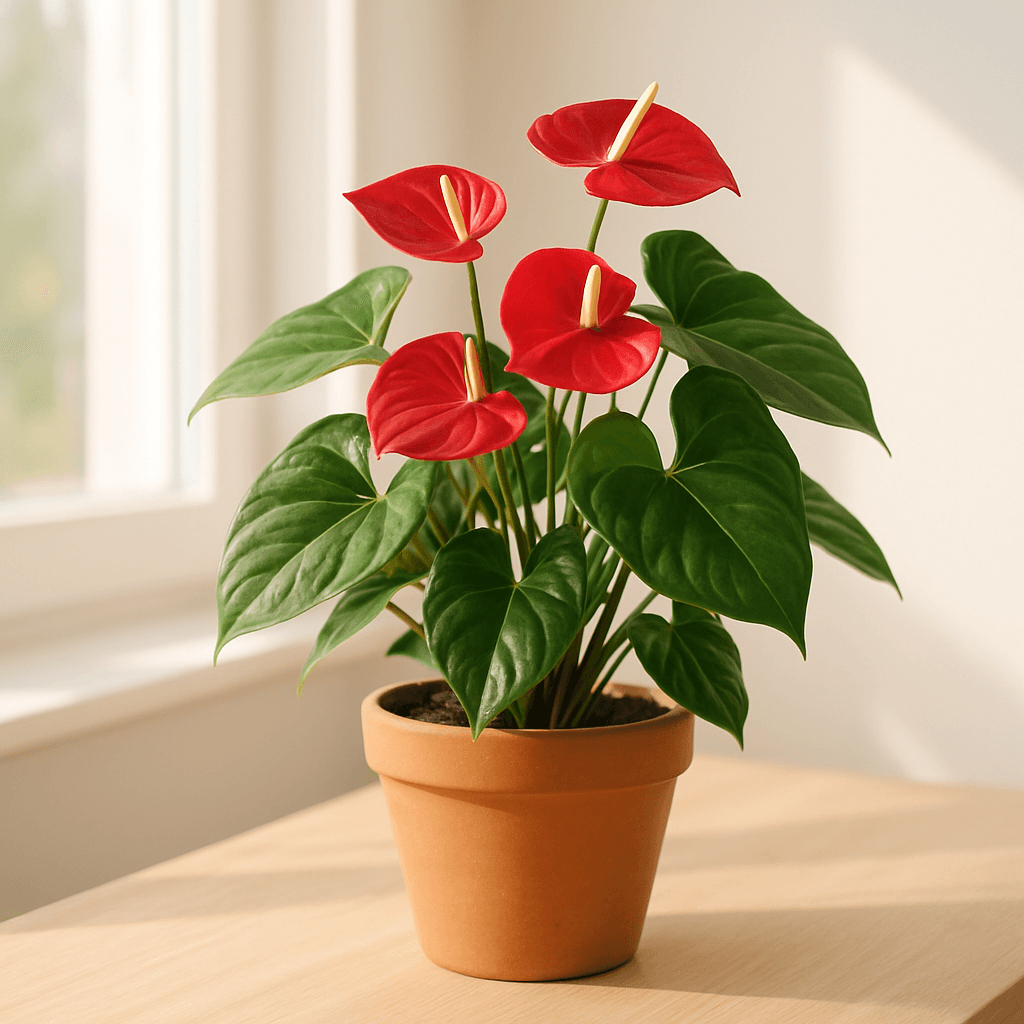
Anthurium's biggest enemy is overwatering — it needs a chunky, bark-heavy aroid mix that drains fast and roots that never sit in moisture. Water when the top inch is dry, give it a bright spot without any direct sun, and the glossy spathes will last for months. The other thing people miss: spent flowers don't drop on their own, so cut them off at the base once the spadix browns.
⭐Difficulty
Easy–Moderate
☀️Light
Bright indirect
💧Watering
Every 1–2 weeks
🌫️Humidity
Medium–High (60–80%)
🌡️Temperature
65–85°F
📈Growth Rate
Moderate
Toxicity
Source: ASPCA Animal Poison Control
Watering
Summer
Every 1–2 weeks
Winter
Every 2–3 weeks
Method: Water when top inch is dry
In summer, water anthurium approximately every 1–2 weeks; in winter cut back to every 2–3 weeks. Rather than following a calendar, water when the top inch of soil feels dry. Water thoroughly until it drains from the bottom, then don't water again until the soil passes the dryness check. Yellow leaves often signal overwatering; drooping with dry soil means it needs water now.
Light Requirements
Bright indirect
Anthurium does best 2–3 feet from a south- or east-facing window, screened from direct midday sun. Direct sun scorches the waxy leaves fast. If you want consistent re-blooming, brighter indirect light is key — a sheer curtain over a south window is ideal.
Soil & Potting
Soil: Chunky aroid mix (bark + perlite + potting mix)
Pot: Pot with drainage; well-aerated
Temperature & Humidity
Temperature: 65–85°F (18–29°C)
Humidity: Medium–High (60–80%)
Fertilizing
Frequency: Monthly spring/summer
Type: Phosphorus-rich fertilizer to encourage blooms
Common Problems
Brown spadix
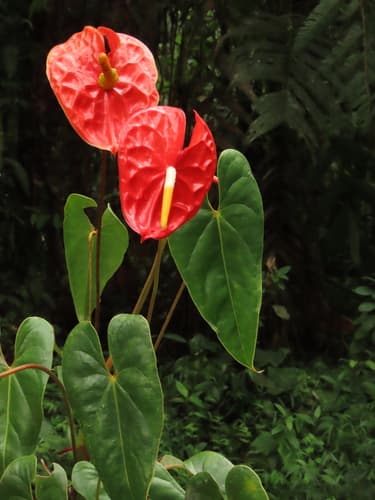
Brown spadix → Old bloom. Remove spent flowers at base. The flower naturally ages from bright red or pink to brown over several months — this is normal aging, not disease. Cut the stem off at its base once the spathe dulls and the spadix browns, which encourages the plant to redirect energy into new blooms rather than seed production.
Yellow leaves
Yellow leaves → Overwatering or too much direct sun. Catching the problem early makes it much easier to fix than waiting until the plant is in serious distress. If soil is consistently wet, hold off watering entirely until it dries out; if light is too harsh, move slightly further from the window or add a sheer curtain.
No new blooms
No new blooms → Needs more light or phosphorus. Move the plant meaningfully closer to a window rather than just a few inches — plants often need far more light than we assume they do. Switch from a balanced fertiliser to one higher in phosphorus (the middle number on the label) during spring and summer to encourage flower production.
Brown tips
Brown tips → Low humidity. Increase with humidifier. Brown tips that aren't soft usually come from low humidity or tap-water minerals (fluoride and chlorine). Try switching to filtered or rainwater and raising local humidity with a pebble tray. Existing brown areas won't green up, but new growth will be clean once the cause is addressed.
Propagation
The most reliable way to propagate anthurium is by division at repotting time. Unpot the plant and gently work the root mass apart with your hands or a clean knife, ensuring each section has healthy roots and at least 2–3 leaves. Pot each division into fresh chunky aroid mix and water lightly. The common mistake: being too tentative. It's fine if some roots are disturbed — the plant is resilient once it has its own established root system. Stem cuttings also work on mature plants — take a cutting with at least 2 nodes and pot directly into moist aroid mix.
Seasonal Care Calendar
🌸 Spring
Spring is when anthurium starts actively pushing new growth as day length and light intensity increase. Increase watering frequency as the plant becomes more active, begin fertilising every 2–4 weeks with a balanced liquid fertiliser, and this is the ideal window for repotting or taking cuttings.
☀️ Summer
Summer is peak growing season — anthurium is working hard and using water and nutrients faster than at other times of year. Water more frequently but check the soil rather than going on a fixed schedule, since heat and higher light accelerate drying. This is when the most blooms typically appear; make sure phosphorus levels are adequate.
🍂 Fall
Fall is a transition: anthurium grows more slowly as light levels decrease. Reduce watering frequency slightly, stop fertilising by late October, and move it closer to a window to compensate for shorter days. Avoid drafts from opening windows as temperatures drop. Watch for flower buds developing — avoid repotting or relocating the plant at this time.
❄️ Winter
In winter, anthurium enters a slower-growth phase and uses water more slowly than in summer. Water less frequently to avoid root issues from soil staying wet too long in low light. If your home is heated and the air is dry, a pebble tray or humidifier keeps the plant comfortable.