Pothos vs Heartleaf Philodendron: Which Is Right for You?
Pothos vs philodendron is the question every new plant owner asks, and the honest answer is: they're almost the same plant to care for. Both like watering every 1–2 weeks, tolerate low light, and trail happily in a hanging pot. The difference that actually matters is how each handles low humidity and how fast it grows.
How Do Pothos and Heartleaf Philodendron Compare?
Both plants share almost identical care requirements. Water when the top inch of soil dries out, every 1–2 weeks in summer and every 2–3 weeks in winter. Both handle low to bright indirect light, tolerate the same temperature range (60–85°F), and root easily from stem cuttings in water or soil.
Pothos (Epipremnum aureum) trails 6–10 feet indoors, grows fast, and handles humidity as low as 40%. Its leaves are waxy and often variegated in yellow, white, or neon green depending on the cultivar. Heartleaf philodendron (Philodendron hederaceum) trails 3–8 feet, grows at a moderate-to-fast pace, and needs humidity of at least 50%. Its leaves are softer, darker, and velvety rather than glossy.
Neither is safe for cats or dogs.
Pothos: What You Need to Know
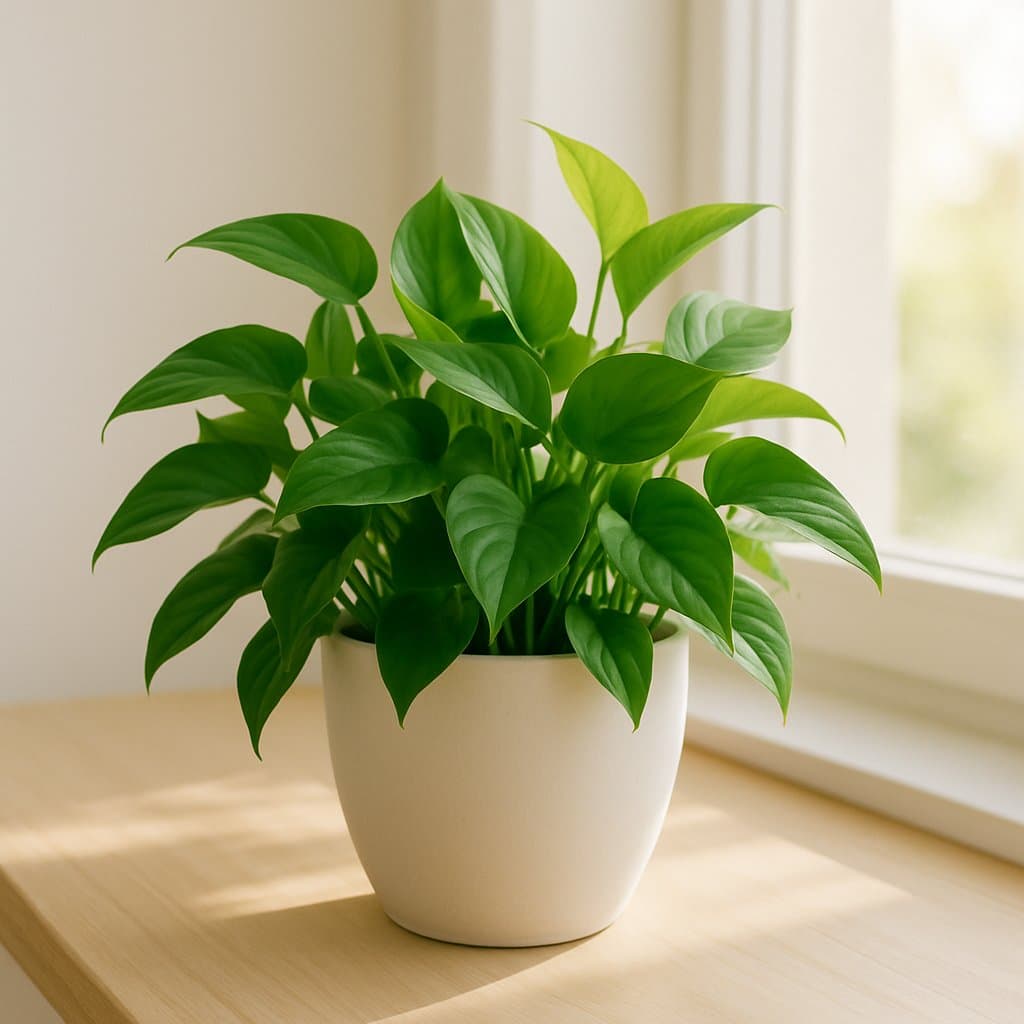
Pothos (Epipremnum aureum) is about as forgiving as a houseplant gets. It handles everything from a dim office corner to a bright windowsill, tolerates humidity as low as 40%, and rarely protests a missed watering. Indoors it trails 6–10 feet and grows fast enough that you'll be propagating cuttings within a year.
Water every 1–2 weeks in summer when the top inch of soil is dry, pulling back to every 2–3 weeks in winter. Standard potting mix with perlite in any pot with drainage holes does the job.
The variety is a genuine advantage. Golden, marble queen, neon, pearls and jade — most garden centres carry at least three or four cultivars. That range of looks is something heartleaf philodendron simply can't match in its standard form.
One firm limit: pothos is toxic to cats and dogs (ASPCA). Both plants contain calcium oxalate crystals that cause oral irritation and GI upset. Not a plant for homes with pets that chew.
Heartleaf Philodendron: What You Need to Know
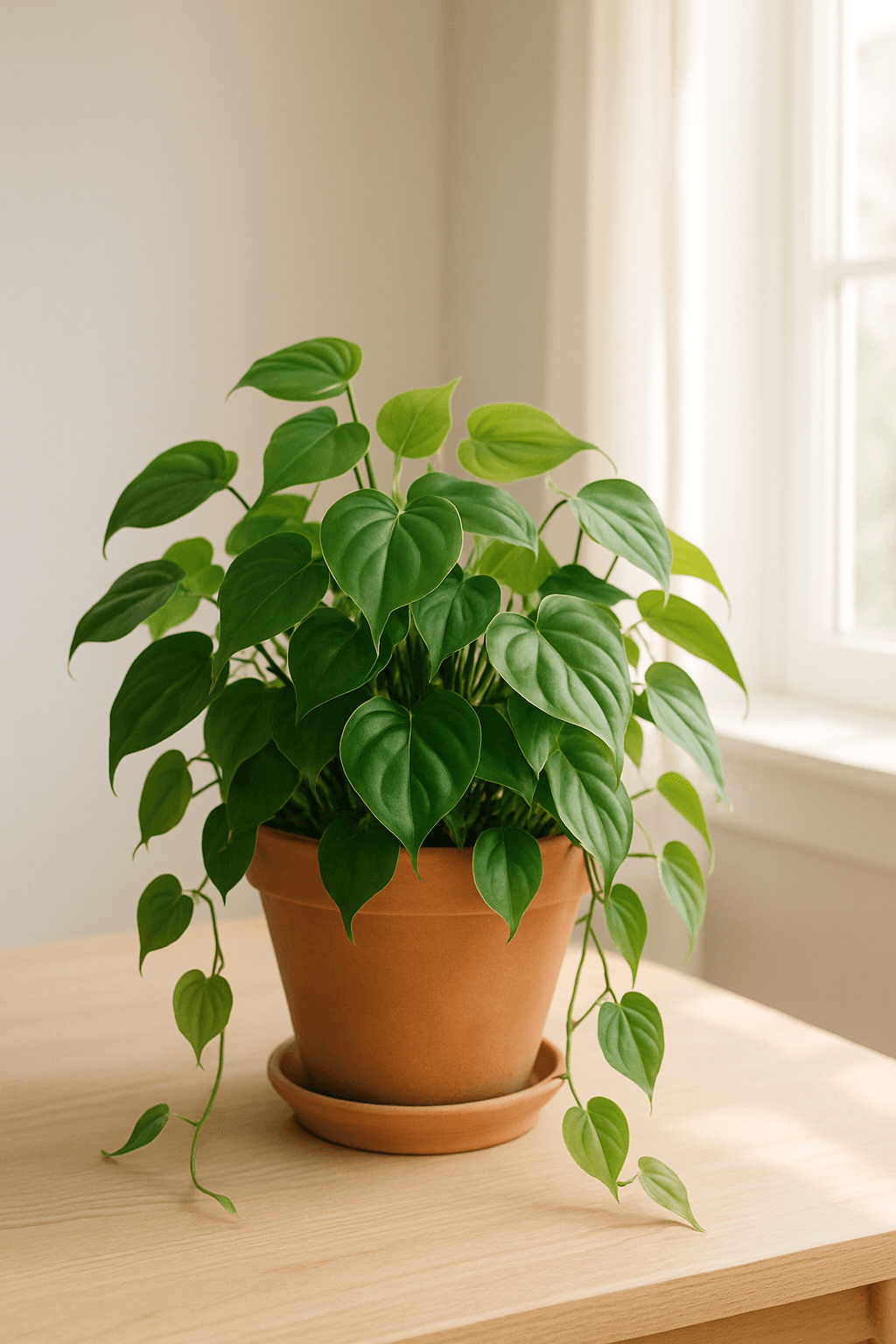
Heartleaf philodendron (Philodendron hederaceum) looks like pothos at a glance. Touch the leaves and the difference is immediate: they're velvety and matte, a deeper, richer green than pothos's waxy surface. For growers who want a quieter, more refined aesthetic, it's genuinely the better-looking plant.
Care is nearly identical to pothos. Water when the top inch dries out, every 1–2 weeks in summer and 2–3 weeks in winter. It handles low to bright indirect light, though it produces its largest leaves in brighter conditions.
Here's where it asks a little more: humidity below 50% causes brown leaf tips, and fluoride in tap water makes the problem worse. A humidifier or a pebble tray helps. Switching to filtered water resolves persistent tip browning.
Indoors it trails 3–8 feet at a moderate-to-fast pace. Vigorous, but not quite as aggressive as pothos in optimal conditions.
What Actually Sets Them Apart?
The watering schedules are identical, so the real comparison comes down to four things.
Growth speed and length. Pothos is faster and longer — 6–10 feet vs heartleaf's 3–8 feet. In a high-light room you'll notice the difference within one growing season.
Humidity tolerance. Pothos handles 40% without complaint. Heartleaf starts showing brown tips below 50%. In a dry apartment, a heated room in winter, or any space without a humidifier, pothos is the lower-maintenance choice.
Leaf appearance. Pothos is waxy and often multi-coloured, with dozens of cultivars to choose from. Heartleaf is always a deep, solid green with a soft, velvety texture. No wrong answer here — it comes down to the look you want.
Fluoride sensitivity. Heartleaf reacts to fluoride in treated tap water with brown tips. Pothos rarely does. If your water is heavily chlorinated or fluoridated, pothos spares you the hassle.
Which Plant Should You Choose?
For most beginners, pothos. It grows faster, survives drier air, comes in more varieties, and asks for nothing special. If you have a dim corner and a habit of forgetting watering day, pothos is the right call.
Choose heartleaf philodendron if you prefer deep-green velvety leaves over waxy variegation, and you're willing to keep humidity above 50% and use filtered water. The extra care is small — but it's real.
Already have one and considering the other? They make good companions. Nearly identical care means you water and feed both at the same time, and the contrast between matte and glossy leaves looks great on a shelf or hanging side by side.
If you have cats or dogs: skip both. Neither plant is pet-safe.
The Bottom Line
Pothos wins for most people because it's faster, more humidity-tolerant, and harder to kill. Choose heartleaf philodendron if you prefer the velvety leaf texture and are willing to keep humidity up. Both are excellent — start with whichever leaf surface appeals to you.
Frequently Asked Questions
Are pothos and heartleaf philodendron the same plant?▾
No. Pothos is Epipremnum aureum; heartleaf philodendron is Philodendron hederaceum. They're both in the Araceae family but are completely different genera. They look similar as young plants, share most care requirements, and get confused at garden centres constantly — but they're not the same plant, and they do have real differences in humidity tolerance and growth rate.
Can pothos and heartleaf philodendron grow in low light?▾
Both can survive in low light, but growth slows noticeably. Pothos handles genuinely dim conditions better and keeps producing leaves at a reduced rate. Heartleaf philodendron in low light produces smaller, paler leaves and may stop growing entirely. For a room with no direct window access, pothos is the safer bet.
Why does my heartleaf philodendron have brown tips but my pothos doesn't?▾
Heartleaf philodendron is more sensitive to low humidity and fluoride in tap water than pothos is. If both plants are in the same spot and only the philodendron is showing brown tips, humidity or water quality is the likely cause. Switch to filtered or rainwater and keep humidity at 50% or above — that fixes most cases.
Which grows faster - pothos or heartleaf philodendron?▾
Pothos grows faster. It trails 6–10 feet indoors; heartleaf philodendron reaches 3–8 feet at a moderate-to-fast pace. In a bright room, pothos will visibly outpace the philodendron within a single growing season. If you want quick coverage on a shelf or trailing over a cabinet, pothos gets there sooner.
Is pothos or heartleaf philodendron safe for cats?▾
Neither is safe. Both contain calcium oxalate crystals that cause oral irritation, drooling, and GI upset in cats and dogs (ASPCA). If you need a trailing vining plant that's genuinely pet-safe, consider Swedish ivy or spider plant as alternatives.