Monstera vs Monstera Adansonii: Which Should You Buy?
Monstera deliciosa and Monstera adansonii are relatives with very different personalities. Deliciosa grows into a massive, slow-moving floor plant with dramatic split leaves. Adansonii is a fast, vining plant with smaller, heavily-holed leaves that looks great trailing from a shelf. Same genus, very different plants for very different spaces.
Monstera vs Monstera Adansonii: Quick Comparison
Both are tropical aroids in the Monstera genus, both want bright indirect light, and both get the fenestrated holes their genus is known for, but at very different scales.
Monstera deliciosa: bright indirect light, water every 1–2 weeks, large floor plant (up to 8 feet indoors), slow-growing, toxic to pets.
Monstera adansonii: medium to bright indirect light, water every 1–2 weeks, fast-growing viner or trailer, smaller leaves with oval holes, toxic to pets.
Size is the practical dividing line. Deliciosa is a commitment in terms of space; adansonii fits comfortably on a shelf or in a hanging basket.
Monstera: Overview
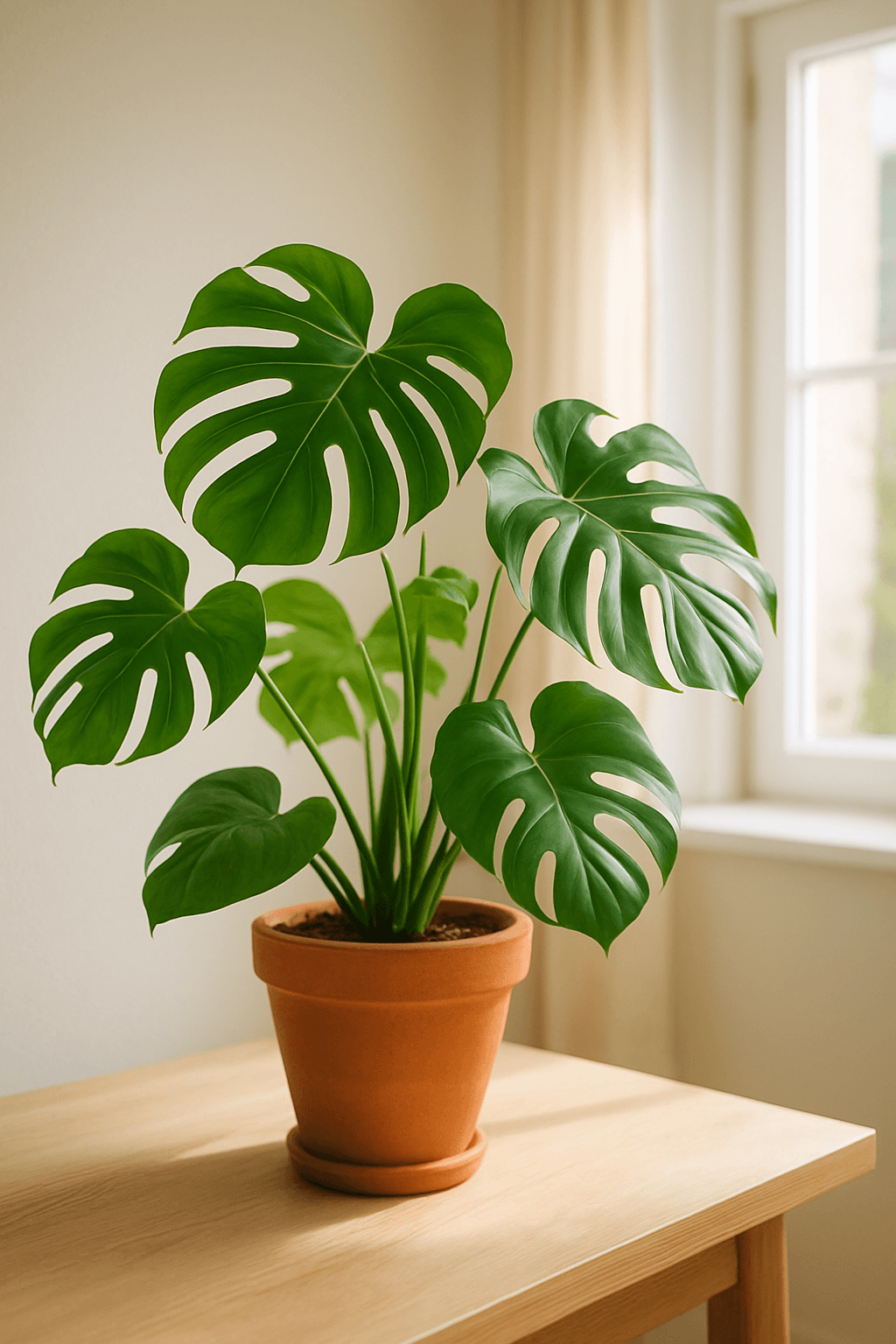
Monstera deliciosa is the plant most people picture when they hear "monstera": large, glossy, split leaves on a thick central stem. It grows slowly but eventually becomes substantial, reaching 6–8 feet indoors over several years. Young plants have solid heart-shaped leaves; the iconic splits and holes develop as the plant matures and gets more light.
Water every 1–2 weeks in summer when the top 2 inches of soil are dry. Medium-high humidity (50–60%) keeps the leaves glossy and healthy. Bright indirect light produces the fastest growth and the most fenestrated leaves. Toxic to cats and dogs (ASPCA).
It does well in a large pot with a moss pole or trellis to climb. Without support, it sprawls sideways rather than growing upright.
Monstera Adansonii: Overview
Monstera adansonii (Swiss cheese vine) is faster, smaller, and more flexible about where it lives. Its leaves are 4–8 inches long, oval-shaped, and covered in natural oval holes that run all the way through. It trails or climbs readily, making it a good candidate for a hanging basket or a plant allowed to wind around a support.
Care is similar to deliciosa: bright indirect light (though it tolerates slightly less), water every 1–2 weeks when the top inch is dry, medium humidity. It grows fast enough that regular trimming keeps it tidy. Toxic to cats and dogs (ASPCA).
In lower light, adansonii stays healthy but the leaves get smaller and the holes become less dramatic. Bright light produces bigger, bolder leaves.
Key Differences That Matter
Size is the obvious one. Monstera deliciosa becomes a large floor plant over time. Adansonii stays manageable and works in a much smaller footprint, including in hanging baskets. If your space is limited, adansonii is the clear choice.
Growth rate favours adansonii. It produces new leaves quickly in good conditions and is one of the faster-growing monsteras. Deliciosa is slower but more architecturally impressive as it matures.
Leaf fenestration differs in pattern. Deliciosa develops splits along the leaf margin as it matures. Adansonii has oval holes throughout the leaf from a young age; you don't have to wait years to see the characteristic look.
Both need similar care, so the choice really comes down to space and what you want the plant to do in your home.
Which One Should You Pick?
Choose monstera deliciosa if you want a floor plant that makes a statement and you have the space for it to grow over time. It's slower, but the eventual size and leaf drama are worth the patience.
Choose monstera adansonii if your space is limited, you want faster results, or you prefer something that trails rather than stands upright. It's also easier to manage; you can train it, trim it, and propagate it without the logistics of moving a large plant.
Honestly, both are rewarding. Many plant lovers end up with one of each.
The Bottom Line
Monstera deliciosa is for people who want a dramatic floor plant and have room to grow it. Monstera adansonii is for people who want the monstera look in a more manageable, faster-growing package. Both are excellent plants; the space you have usually makes the decision for you.
Frequently Asked Questions
Is monstera or monstera adansonii easier to care for?▾
Both are similarly easy. Adansonii is slightly more tolerant of moderate light and grows faster, which some find more satisfying. Deliciosa's slower pace means you repot less often and make fewer judgment calls. Neither is particularly demanding once it's in the right spot.
Can both survive in low light?▾
Both tolerate low light better than many tropical plants, but growth slows dramatically and the fenestration becomes less pronounced. Adansonii handles slightly dimmer conditions than deliciosa without complaint. Neither does well in a room without any natural light.
Which is safer for pets?▾
Neither is safe for cats or dogs. Both monstera deliciosa and monstera adansonii contain calcium oxalate crystals that cause oral irritation, excessive drooling, and GI upset if ingested (ASPCA). Keep both away from pets that chew on plants.
What's the ideal humidity for each?▾
Monstera deliciosa prefers 50–60% humidity. Adansonii is similar and appreciates 50%+. Both tolerate standard home humidity without major issues, but the leaves look better with a little extra moisture. A humidifier or a pebble tray with water helps during dry winter months.