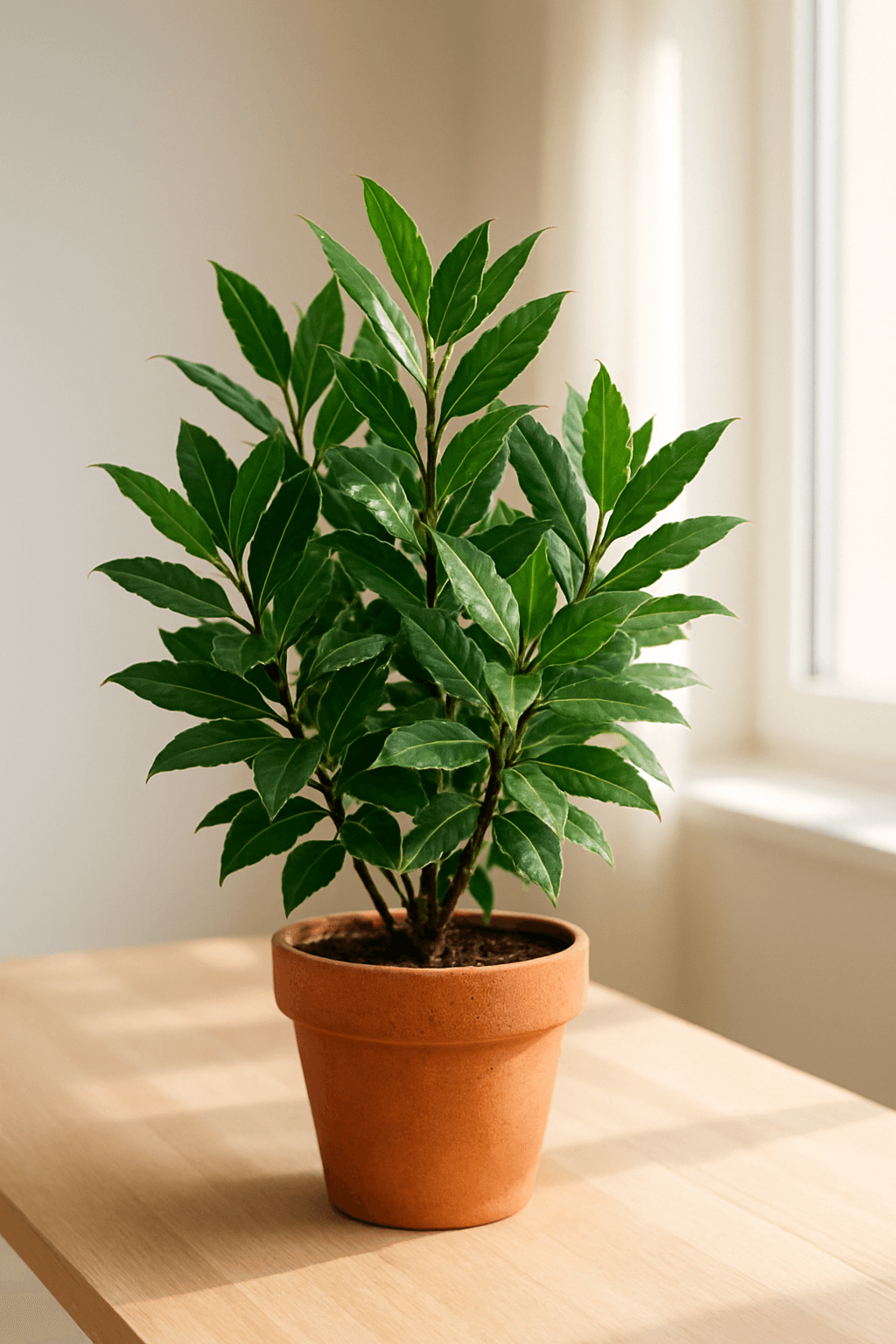
Bay Laurel vs Lace Aloe
Deciding between Bay Laurel and Lace Aloe? Both are solid choices with different care needs. Learn which fits your lifestyle.

Bay Laurel vs Lace Aloe: Quick Comparison
Bay Laurel (Laurus nobilis): Bright indirect to full sun light, Every 7–10 days watering. Lace Aloe (Aloe aristata (syn. Aristaloe aristata)): Bright indirect to some direct sun light, Every 10–14 days watering. Different plants for different homes.
Bay Laurel: Profile
Easy difficulty. Bright indirect to full sun light. Every 7–10 days watering. Grows slow. Bay laurel is the culinary bay leaf used in cooking. Very long-lived; can become a large tree but is easily kept compact with pruning. Slow-growing and unfussy once established. Non-toxic to pets.
Lace Aloe: Profile
Easy difficulty. Bright indirect to some direct sun light. Every 10–14 days watering. Grows slow–moderate. A compact, beautiful aloe with white-spotted tuberculate leaves and soft tips — unlike many aloes, the leaf tips are not dangerously sharp. Very cold-hardy down to 28°F (more than most aloes). Produces orange-red tubular flowers on tall stalks in summer. Toxic to pets (like all aloes).
Making Your Choice
Bay Laurel works if you have Bright indirect to full sun light and can water Every 7–10 days. Lace Aloe suits Bright indirect to some direct sun light and Every 10–14 days watering schedule. Match plant to your conditions.
Bottom Line
Both are worthwhile. Success comes from matching the plant to your home.
The Bottom Line
Pick Bay Laurel or Lace Aloe based on your light and watering commitment. Either choice works.
Frequently Asked Questions
Similar plants?▾
Different enough. Bay Laurel needs Bright indirect to full sun. Lace Aloe needs Bright indirect to some direct sun. Pick based on your light.
Which is easier?▾
Bay Laurel: Easy. Lace Aloe: Easy.
Can I keep both?▾
Yes, if conditions match. Most homes have room for both.
Growth rate?▾
Bay Laurel grows slow. Lace Aloe grows slow–moderate.